
Crossing The Rubicon

Preface:
I make the usual disclaimer that this essay is but one of many components extracted out of its natural context from a much larger piece in which it is situated in. It is true, as written in the title, a a subⁿchapter— and yes, you read that right: it is a subchapter within a subchapter within a subchapter (chapter(chapter(chapter(…))) of a much larger “pseudo-book” that is incumbent to progressing labor. As such, the disclaimer as obvious: there may be certain references, ideas, etc. which seem unmotivated in present context; there may be various pieces of commentary which seem ever so unprompted or spontaneous, seemingly random discussions which butt in with an insulting and irrational lack of justification.
Anyhow, having yet not completed the full body of the aforementioned “pseudo-book” (and it is truly lengthy, some several hundred pages), I decided that it was still ever worthwhile to publish snippets of those constituent subⁿchapters as hors d’oeuvres in the meantime.
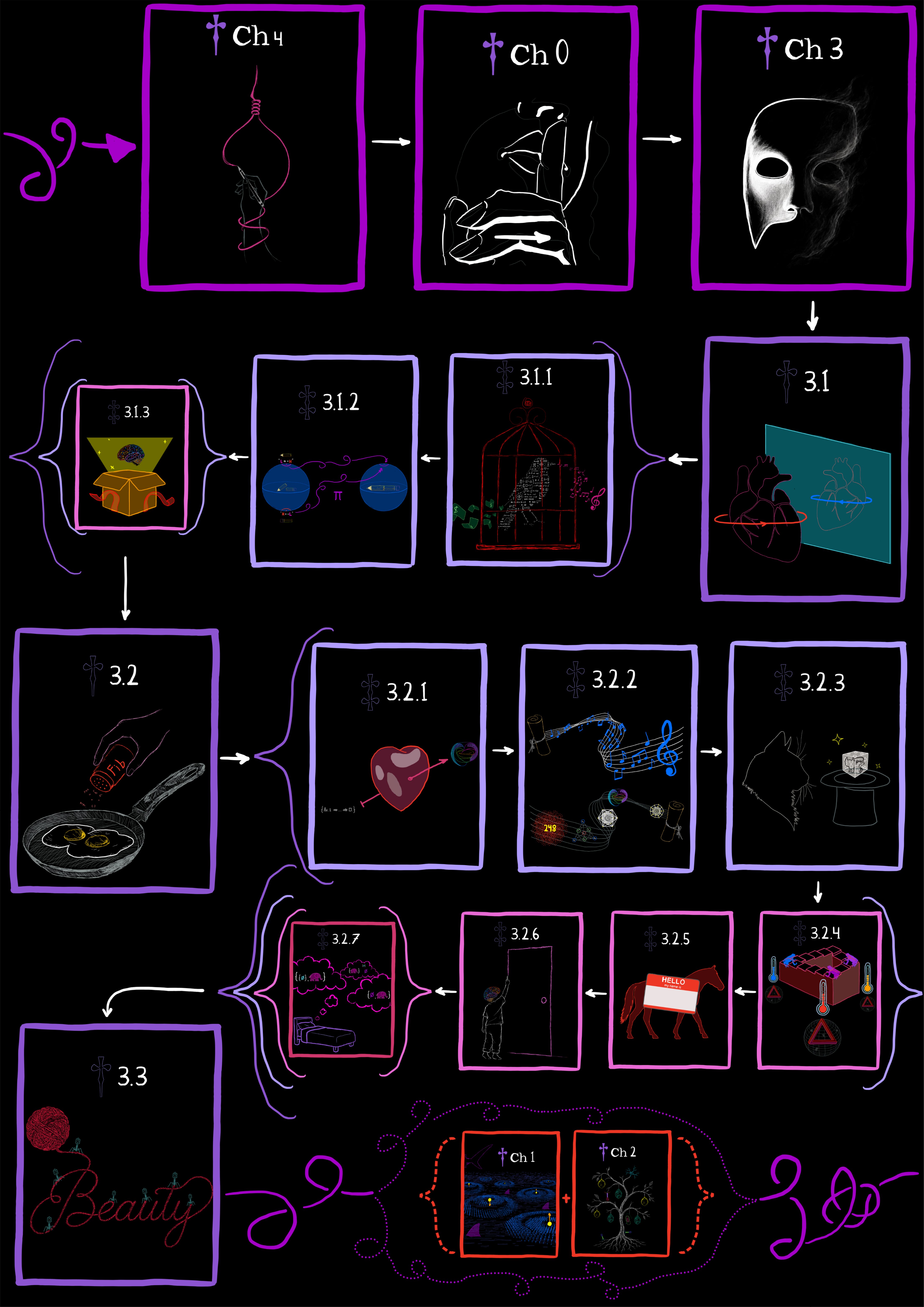
We had not so long ago put up with Chapter 4 (and before that, 3.3):

Contrary to elementary arithmetic, here 4 comes before 0. As I had caveated in its preface, Chapter 4 served as something of a cryptic introductory-conclusion ([sic] yes, oxymoronic with intention). I suppose that makes chapter 0 its natural counterpart in the ouroboros of this story awhole. Perhaps, by whatever insult to its nōmen as an introduction: chapter 0 is in fact the clarifying reconciliation to its own precedence as spoiled or otherwise curtailed by chapter 4, insofar as the premising moral of the whole “book” is finally (o the irony) revealed. I claim that somehow chapter 0 shall soothe all those abstractive confusions piqued affield from chapter 4; at least I hope, those were my intentions at least, otherwise I have failed.
Anyways,
Chapter 0:
Crossing The Rubicon
The Invitation to Leave; Why This Isn’t Worth Reading
𝅘𝅥𝅮 He deals the cards as a meditation
And those he plays never suspect…𝅘𝅥𝅮
♫ I know that the spades are the swords of a soldier
I know that the clubs are weapons of war
I know that diamonds mean money for this art
But that’s not the shape of my heart ♫
– Sting (Shape of My Heart 1993)
“Everyone, deep in their hearts, is waiting for the end of the world to come.”
– Haruki Murakami (1Q84)
The gambler is married to a kind of desparity, a nihilism, or wait– is it hope? Amiss, unclear: whether to win or simply to not-lose; either way, it is his life– he can do naught but watch as the dice liberate, with or without him, of chance and choice; the gambler muses and all the same it is not him who chooses. Is he looking for riches? Is he escaping a debt? For what does it matter! His empty wallet remains apathetic to such frivolities. Is it a conviction which possesses him, or is he merely enslaved to the stench, afoot, not so far down from fallacy; ever to be collared to the hail-mary fatalism; in deluge, he is drowning; in delus(ion), a Dostoevsky’ian desperation: “Or perhaps it is because it is so necessary for you to win. It is like a drowning man catching at a straw. You yourself will agree that, unless he were drowning he would not mistake a straw for the trunk of a tree”. The ambitious idiocy of it– is there even sense to the wasting of impotency? To be Quixotic of some hope once whetted here or there, is one thing; whether the child is born liable to those natural instincts, is another– should there be room to accuse the infant of pouting as holier-than-thou? Perhaps they are, holier, and yet to a fault needless and unplaced. Woe the fool who can do no more than throw stones at the moon and chuck pails against an inferno; his dice are telling quotes for a post-humous gravestone, his gamble at best a suicide note– alas, the epilogue of a cautionary tale.
My diary is home to some good few eschatological rumors, of varying flavors. I would not otherwise consider myself a pessimist, but alas, so I have my grousings as do we all. However many of them amount to anything worth the arbitrageur’s notice, is even fewer and certainly not gooder. Perhaps this one is no less fanciful and even the least of that which is worth writing about, to a latent irony which shall eventually be its own pride in manifest. So be it: if it’s not worth reading, then don’t read. But how would you know? Whether it were, is, was, will, be worth reading– you would have to read it. Huh.
I would prefer you stopped reading here. But if I explained why, you would be reading; and if on the other hand you take my word for what it is, trust, and stopped reading: then why here are you still–
I suppose we are at odds.
Maybe this is a battle of wits– whether you will stop reading before I can tire of telling my tales. Either way, should you beat me to the end and arrive at the final words: I claim that we will both slouch unto a disappointed agreement that it was no better than a waste of time.
And yet here, I am still writing, and you are still reading.
Anyways–
Don’t get me wrong: I think that “arbitrage” is both a wonderful word, and also entirely obnoxious in a sense of its own, notwithstanding of course the sociological associations with Patagonia-breasted individuals– to say nothing of the industry in synecdoche. Nevertheless, it is a useful word. In practice, it is rather obnoxious in the sense that it is wielded often for hardly any other reason besides the lexical suave– and even overused, where it is, again, branded by suave when its loose definition as “value” would have otherwise sufficed; “that new restaurant down the block, it’s arbitrage”. But this is nothing more than a heuristic. The precise definition is indeed rather telling: it shall be understood, particularly, as an afffliction of mispricing. Arbitrage describes the existence of a discrepancy between perceived and worthy value (i.e: overpriced, underpriced) across markets; and therein it follows as to why it takes hazy synonym with “value, opportunity”, since such a discrepancy naturally calls to action the instruments and the trades to capitalize upon it. There are 4 key elements which characterize something of a universal trade in capitalizing upon such “opportunities” (scare quotes, indeed; these “opportunities” are most often catastrophic to a broader society– to the utilitarian, it is rather unclear that this can be anything more than zero-sum game): (1) a trade view (2) a trade expression (3) a function to calculate cost-of-carry, and finally (4) a catalyst. To begin the proposition of my wager, here what follows– for lack of better description, whether it is infeasible or even desirable at all to give this ~essay a class is another matter– is a turbulent outline of the trade-(view+expression), as written in the form of a winding pseudo-biographical story. You shall be keen to notice that I left out the latter two elements: indeed, these shall be left as an inductive exercise to the reader– it would hardly be any fun to spell them out in such prosaic explicitries; we shall share in some part the Mathematician’s bore for concrete examples; nevertheless, they are present and well alluded to, found in scattered abstraction through the depths of the further chapters. Consider it a scavenger hunt!
It is perhaps needless to announce the occupant elephant in a room already so starved of oxygen, indeed it is rather an insult-to-injury; there is always a comic-relief character in every film who commits this crime of spelling out the plot’s crisis writ large. Nevertheless. We can– and perhaps we ought– pivot our frivolities to enjoy the facetious deadpan in stating the upsettingly obvious; there is a kind of moral necessity to the fart at a baby’s funeral– oh, sue me for the morbid comedy, I cite of Kierkegaard’s advice to laughter as the only tactical response to horror. Facetious we shall be. I suppose there is hardly any way to state it otherwise besides with a deliberate clerical banality. I carefully zip up my fly, knit the first of the two buttons of my jacket, straighten my tie, and tap the microphone twice for an echo-check: we claim a grand mispricing, and therein, perhaps an “~opportunity” (scare-quotes once more) to short what is now a long-due, over-leveraged, overpriced security at the bedrock of our societal infrastructure. You shall know it as the “résumé”. And insofar as to whether the Keynes’ian simulacra shall insult us– whether “the market can remain delusional longer than we can remain solvent”– there are good reasons for which even the most remotely insensible eschatological rumors deserve hear. If for nothing else but the amusement to paranoia, perhaps there are babies in the bathwater unto some other cultural indicator; that is to say: the uptick in space-denying conspiracies and schizo-reptilian fantasies are worth listening to, for surely not scientific substance but at least a profound tell in epistemological temperature. In any case: rest assured, I am not selling anything (though in all hypocrisy, it is generally not good advice to trust the salesman who claims nothing to market, if anything, all the more dubitable). There shall hardly even be the need to volunteer as arbitrageurs here, spectatorship suffices– in fact, it is perhaps even all the more desirable, to objectivity, insofar as it is without stakes that we shall be free to witness the game theoretics of it all in guiltless clarity.
George Box said “all models are wrong, but some are useful…”; yeah, yeah, I have a rich quiver of truisms and platitudes of similar nature, I can spout them all day– as can we all– up to only a saturated productivity of course. It is therein not in my synopsis to bore you with the lyricals of “everybody’s a genius, but if you judge a fish on arboreality…” and the like. There are no shortage of pithy parables to this effect, that is not to say that its obviousity in any way denigrates its moral– it is in fact its degree of complacent acknowledgement, writ large and yet spoken small, which makes it all the more worthy of notice. My personal favorite: there is somewhat of a joke that differential geometry is the study of objects invariant under change of notation. I have it as my personal “fundamental theorem of geometry”, that there is no canonical metric, no canonical coordinate system, which is of universal superiority to any other: indeed, the Euclidean metric is everyone’s vanilla, though it is hardly appropriate in the circumstances of a cross-atlantic flight path; likewise, geodesics forgone, there is no prudent reason to equip the spherical metric (i.e: the distance the crow flies, rather than the distance the mole burrows) for something as simple as navigating to the nearest grocery store; and if you live in the urban-metro, well, then straight-line distance is rather an impotence, and thereof, we opt for the city-block/discrete metric in its lieu. It is a moral you have heard to no end unto pontifications galore.
“An era can be said to end when its basic illusions are exhausted”
– Arthur Miller
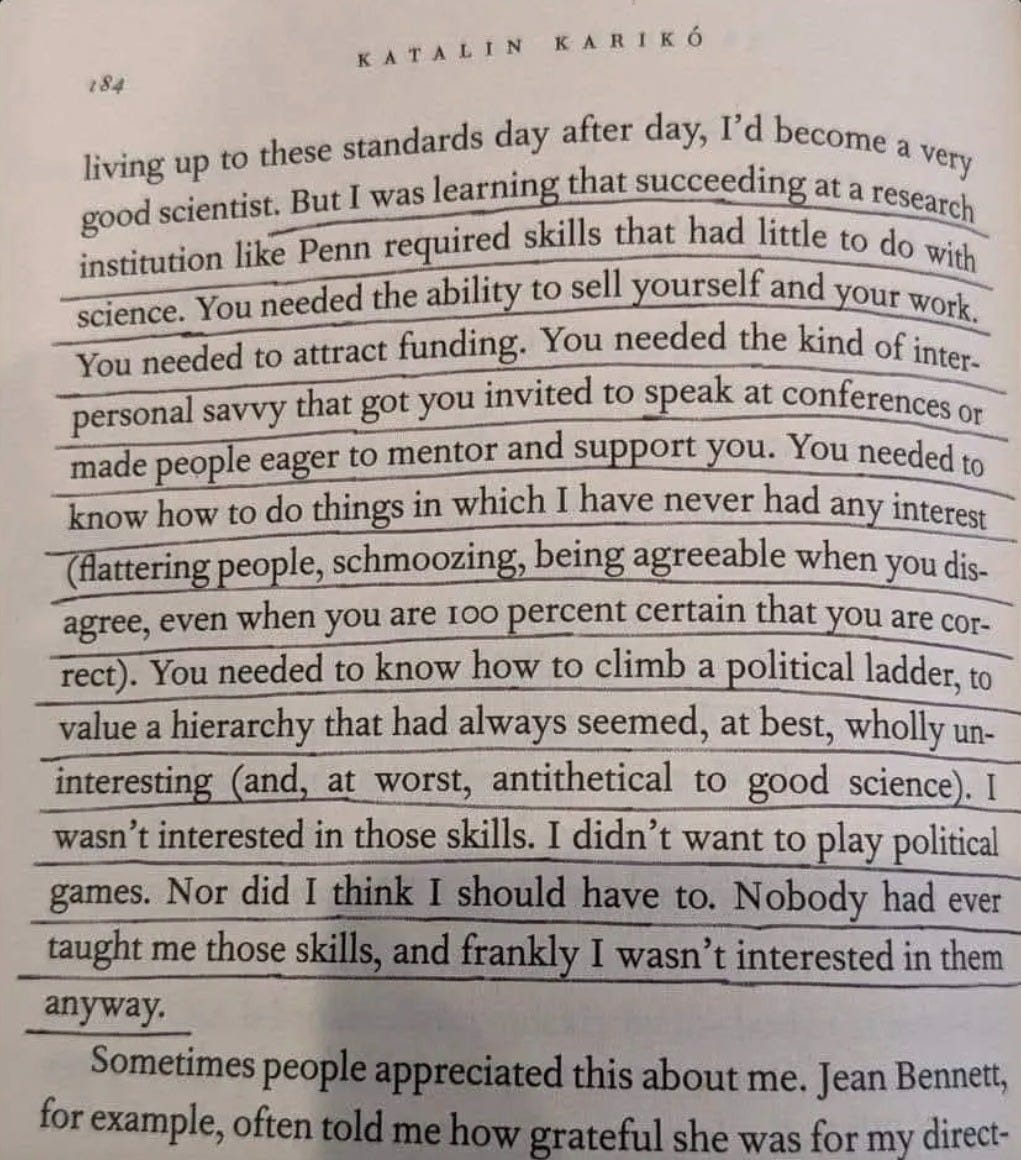
Of course the résumé doesn’t work! If this is an insurrection, it surely isn’t a good one; there is nothing up my sleeve, I am not waiting in rhetorical ambush, it is hardly polemic. No truly sane person believes that it is possible to earnestly paint the full palette of one’s characterological assets and liabilities (that is, if liabilities are at all supposed to be advertised) onto a sheet of bulletpoints– neither do I, sanity notwithstanding. The elephant in the room, I think, may actually be an attendee of this party. I am not inciting protest to the social contract, if it rises at all even to the level of petty crime is dubitable– much less warrant to accusation of mass psychosis nor Solzhenitsyn’ian simulacra (“I know that you are lying, you know that I am lying, I even know that you know…”). It’s just the social contract, I get it: c’est la vie! They are the rules of the game we play, without it, the game ceases; I am no truth-maximalist, of any game, there is a necessary dose of collective fantasy– I make progress atop my holster of little lies just as much as the next person. I pretend the résumé works, the employer pretends the résumé works, quid pro quo. The little kayfabe of professionalism: I tell you my strengths and weaknesses (you are hardly fooled to my rhetorical dexterities as I smuggle in a few pseudo-weaknesses that may actually come off as strengths; like “working too hard”, “obsessiveness”, and so on. These may even be true, but the employer shall ever be feint to believe it), you pretend you care about my careerologicals and hospitalities for growth (this may even be earnest, but in the end: bottom line takes precedence to all).
It’s the little game we play. Choreographed and all; I am no stranger to the dance. As delusions go, and especially of those which are quiet pillars of society (Ernest Renan: “Nations are built on as much of what people agree to remember as what they agree to forget”), this is a rather tame one; I am not anti-delusion. In perhaps more genial phrasing: a civilization rests on dreams, on ideals, many of which are nothing more than pragmatic unattainabilities, sure, but as of any function which chases its limit: it is this upper ceiling which habituates a necessary moral aspiration that progresses us forward. I am happy to peddle the lies of any delusion which thereof serves its ugly purpose, so long as it is useful; should it, however, cease to function, oh and more than merely cease to function in the nugatory sense, if it were mere liability– hey, society is an LLC, worst case we recoup the losses. Over-leveraged insolvency, however, has nontrivial epidemiology.
“A fire broke out backstage in a theatre. The clown came out to warn the public; they thought it was a joke and applauded. He repeated it; the acclaim was even greater. I think that’s just how the world will come to an end: to general applause from wits who believe it’s a joke.”
–Søren Kierkegaard
I shamelessly cherrypick the following examples in bow of the extremes, demonstration ala absurdum. The premise is intuitive and regrettably humorous (in this Kierkegaard’ian fashion I encourage you to laugh– I promise I shall not guilt you for it; laughter is perhaps indeed the physiological mechanism to make content with absurdity): a pseudonymous résumé submitted under no guise of transparent retributive absurdity, dare say if public indecency could be saved as a PDF: this would be it. On paper (or these days, a file attachment; save the trees! Corporations can feign sympathy for sin too, in fact their confession booth is rather transparent), it’s immaculate, it’s everything you’d want to see– gilded titles, venerable institutions, the whole lot; y’know, the kind of credentialist porn that makes recruiters salivate. I speak with the utmost minimal degree of exaggeration to say that it takes no more than mildly-attentive eyes– no, I am being too polite, $hit a medically valid pulse would suffice– to notice quicker than immediately that it is farce, nothing more than a collection of trivially nonsensical joke bombs which no person in their right mind would be willing to admit even had they been factual. It may as well have “I ♡ Wasting Employer Resources: Proof that Nobody reads the Fine Print” stamped all over it in Comic Sans.
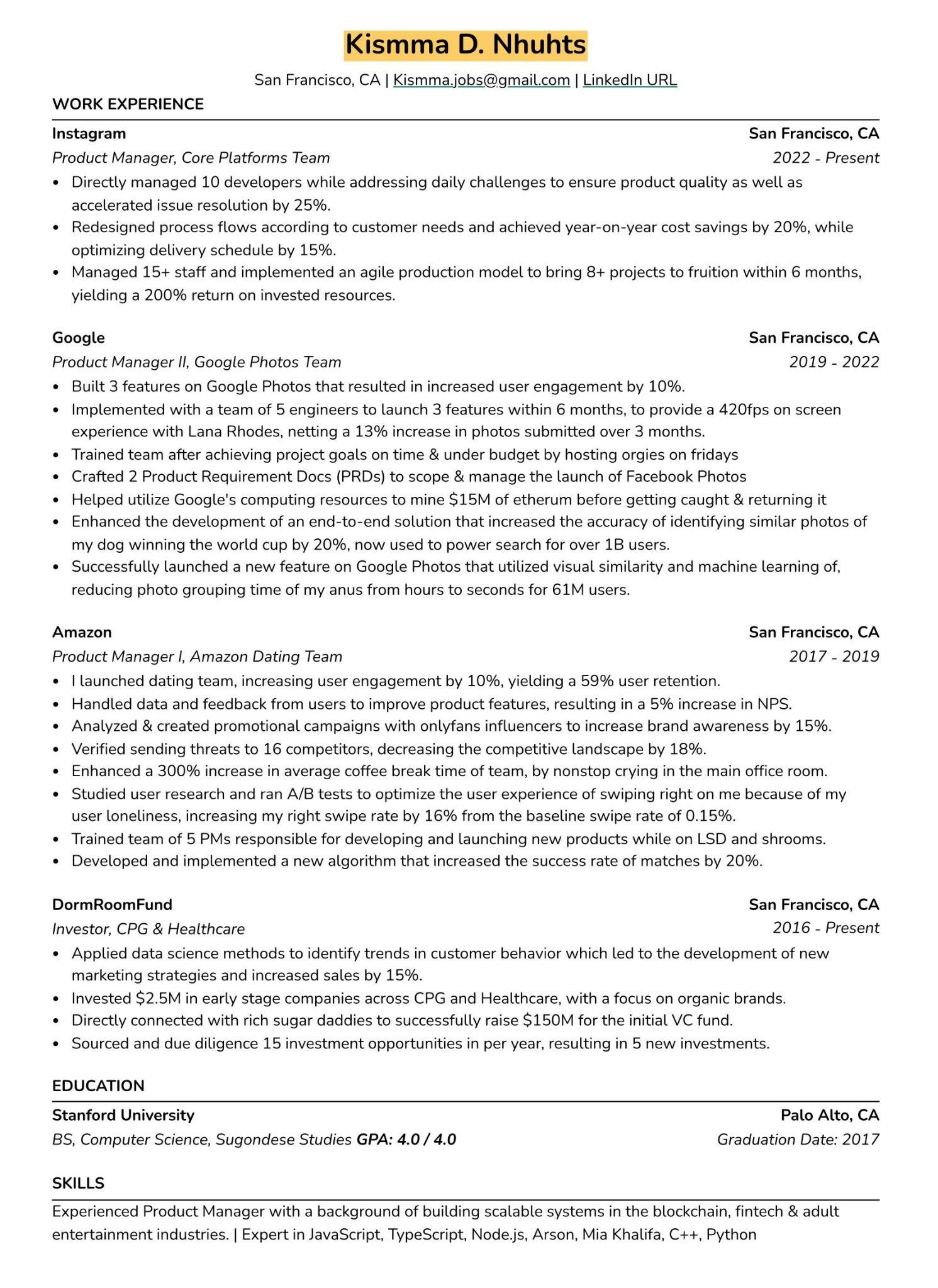

I didn’t think it was possible to fail at career suicide, much less in such vicinity. Surely. I am not generally a pessimist, though here the optimism is, alas, a fantasy. If this were tabletop conversation, I would seek great amusement in having you guess the numbers– to watch as the flames of optimism stoke, or rather smother, in increments of increasing aghastivity. The first résumé earned 29 interviews out of 100 submissions; the second, an even more terrifying 90% interview acceptance rate. By any and dare every objective measure, these farcical documents succeeded. There is hardly any glucose envelope around that (I could have, of course, simply written “sugarcoat”; but the résumé insists! You shall from now on, ever come to suspect, that this whole thing is just a giant dress in résumé– that every word from here on out has been so meticulously crafted, contrived, all to impress; this is a natural skepticism, in fact all so dangerous precisely because I can do nothing about it). The ostentatious bombasticity– and at that, not very excellently disguised I must add– slipped through whatever porous system of “checks and balances” we pretend governs modern hiring; when we say “slipped through”, here we are being much too lenient– they excelled, and it is true no matter how you look at it. Indeed the irony here is not lost, and it is moreover in contravariance– it is rather unclear who I am protesting on behalf of now. I was unsatisfied, and I thought I was lamenting on account of the employed– now I am not so sure, and I wonder if anything, that this very complaint should be produced by the employers instead. Indeed it is so ubiquitous it has even a name (and this is no good sign, for the fact that it is so obvious, widespread, clearly plighting, and yet the malcontent rises only up to the point of linguistic coinage and no further): the industry calls this chronic blindness the “homogenous CV problem”.
Bertrand Russell soured that Life was nothing but a competition to be the criminal rather than the victim. It is perhaps worse than he feared. For a Voltaire’ian absurdity, it is no longer clear who here is the comedian and who the audience, who the criminal and the victim, who is getting the best of the other– indeed, somehow this is precisely the nadir of a good deal: there is a rather appalling saying in the Business world, for its misanthropic charge, that “a good deal is one in which both parties walk away thinking they have conned the other”. Here we have a situation in which “... both parties walk away having conned the other, and felt conned by the other”. It is so good a joke that we are afraid to laugh. There is the groveler, the groveled, the groveled-to, and none of them are satisfied– but c’est la vie they say! Let us watch each other suffer, the applicant in kowtow or the employer in choice-anxiety; will anyone make date to the big dance? They say there are plenty of fish in the sea, and yet I imagine this is not good news to the middle of a baitball– to whom do I wed when we all look the same (Oh the Romantic troubles to be a Sardine)!
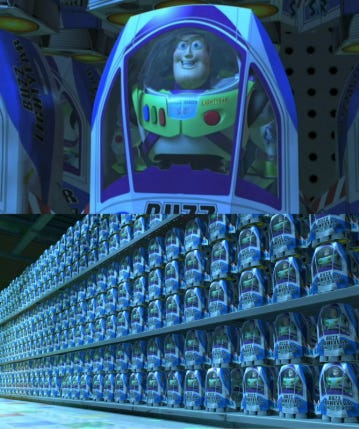

You sit here, laughing– you feign a kind of shock; but I claim that you laugh only because somewhere deep down, this is unsurprising to you: somewhere in the nastiest, most misanthropic, pessimistic crevices of your psyche, it has thus been to you a nudging confirmation of what you already know, an unspoken concession to something you’ve seen (maybe even participated in) time and time again. Exaggerated? Sure. But this isn’t the first time, nor the last, that you’ve seen Kismma D. Nhuht’s résumé of a kind. Modulo the exaggerative audacity, it strikes chord of what shall soon be a familiar anthem; strip away the comic dressing and what remains is a grim little truism: indeed, that deceit, so long as it is well-formatted and confidently serifed, passes for competence with a Machiavellian air– confidence and competence are, after all, necessities (but not sufficiencies) for one another.
Bombasticity and empty rhetoric are long time tenants of the human psyche, the little devil on our left shoulder has paid rent since the dawn of civilization; and so too am I, of course, guilty of this, the human tongue has always had a fluency in exaggeration. C’est la vie! Civilization itself was probably propped up on a Powerpoint slide-deck full of buzz-word adjectives– the problem thereof isn’t that we lie, I adore my collective fictions too, it’s that we’ve professionalized it, insofar as we justify to ourselves in self-therapized convolution that our vices are in fact “marketing skills”. Do not have me mistaken: it does not even count as advice to ware off engagement in the baseless and fraudulent market of snake oil, it is however just as obvious that this does not warrant the disqualification of all of social intelligence; the means and morals of ethos-pathos-logos unto the rhetorical art we call persuasion. We have on our port-side Scylla, the charlatan who drowns in artifice; on our starboard-side we have Charybdis*, a solipsistic quietude who feels it never their obligation to persuade. Of a failing student, ought we blame the student entirely on indolence, blame the teacher entirely on pedagogical duties deferred?– let us not be so ridiculous. Inasmuch as both “early bird gets the worm” and “slow and steady wins the race” can be independently truthful yet nevertheless contradictory idioms: however good advice each may be, however imperative it is to avoid monsters on both ends, both are true, and both are treacherous when taken as gospel. Again, platitudes you have heard all too well. Though perhaps in even these truisms, we preach in charge of hope: somewhere between the salesman and the sophist, the honest rhetorician must still exist.
“When all are guilty, no one is; confessions of collective guilt are the best possible safeguard against the discovery of culprits, and the very magnitude of the crime the best excuse for doing nothing.”
– Hannah Arendt
It shall ever be so easy to fall back on the sootheries in slogan, “don’t hate the player, hate the game”, or so we like to tell ourselves– as if moral absolution were baked into game-theoretic hardcode. When the line between adaptation and complicity becomes casual slur, who are we kidding? Are there ever spirits or letters of the law which distinguish arsonry from “fighting an unscrupulous fire with another unscrupulous fire”, is it ever up to anything beyond the whims and talents of the attorney in question? It has its cynical charm, this we can hardly deny– it is a popular slogan for good reason, though perhaps not so good a cause; at what point does playing the game too well turn you into the very condemnation you sought to escape? We have long known, indeed it is more than obvious, that the résumé system is broken: so why not play it to its advantage? Is it not only fair? At that, fair to whom? The crabs in the bucket have a fairness unmatched. Need of what reason, if there are any at all, that we not play accordingly unscrupulous to the superficiality of our captors? Are we then, not our own captors? Ah. “None other than the time old tale of complicity”, spake the author in sanguine, perched on a moral righteousness. It is seductively easy to be one’s own sycophanta in this respect– the fluency, a road to defection well lubricated: that is precisely the allure, you are not mistaken that this is precisely by design that these games appeal to a game-theoretic epidemic. I can hardly think of any rhetoric in all of history (indeed, even generalized beyond the human circumstances: the Evolutionary landscape of Biology herself is succumbed all the same in more ways than one) which compares by potency: that gaming the system for the flaws it inflicts unto you, is a bloodless crime; the guilt quotients out by number of participation. That you are but a cog seeking to win in the grand iniquity of a defectively oiled machine– after all, you are but a tiny player in such a vastly incontestable system right? Lest we all become ascetics of the highest order, self-sacrificing down to skin and bones; bread before ethics! Only the satiated have the luxury of acting morally… O the quixotics to prohibition!
Hannah Arendt observed brilliantly in “...The Banality of Evil”: it would seem as though the greatest evils are often those committed by those who never made up their mind whether to be good or evil.
So let us make choices.
Do we commit to the moral sublimation, to be subsumed as part of the machine– perhaps we need not be in outright bow to– but nevertheless accepting our superior’s orders to a disappointing fate, amalgam to the problem and forced in pseudo-voluntary to propagate its intrinsic flaws. That we are to acknowledge of the corruption of so broken a system, that we are ever not bloodless to the crime of participation– but with at the very least some soothery to insomnia, that our pillow remains soft, knowing that our share of the collective pathology is insignificant at best. Sweet dreams; what an innocent and intoxicating existence– please, let us not fool ourselves with such indolent fancy. Sure. We are but one player, this is true, and though it is just as much true that it is with every player gained that the system only accelerates into further madness– it shall be nothing more than the same fuzziness of Sorites’ pile of sand. How should one know; you, to some nonzero accountability, unwillingly imprison the choices of those who shall come after you– their minds are made up for them, in keeping up to this rapidly scaling pyramid which secludes itself to ever smaller a circle of winners, eventually insurmountably so. Thereof, should it be you, now: here, born into the final stages of the game. Let there be no mistake. You have lost your choice. You must contend with with the fact that your contribution is certainly not bloodless, and perhaps even the final match to Sorites’ catastrophe. There was no single brick which can be held responsible for the leaning tower, and yet we can very confidently litigate the blame to the collective of those bricks. As they say, it may even be worse to know that you are the first– or last– of the bricks laid to the foundation of the tower of Pisa.
Alternatively, let us make the other choice: suicide.
Let there be no mistake, this is by every definition an unwinnable race. At the tails of consequence, provided it lasts long enough to observe: there is hardly any sense of permanency to “victory”, there is a poetically morbid akination to the latent period in radiation sickness, it is evasion-acute, deceptive safety. Partaking unto the nth level of safety only progresses the game to further extremes, it is hardly edgy to do what everybody else is already willing to do, we must push to greater and greater taboos; it is only a prolonging of defeat this way, it is rather a fraternistic haze, the standards of sin only elevated with every vote of contribution. First somebody wins, then everybody loses. The game-theoretic race to the bottom; much of the first athletic doper who began an eternally propagating steroid-enhancement race, the econo-environmental Tragedy of the Commons, the canonicality to the nuclear arms-race and the pseudo-safety therein of mutually-assured destruction. The act, the decision rather, to quit such a race can only be in the face of so sour a pay-off matrix that no outcome can seem any less unfavorable than the other. You lose, we lose, lose alone, lose together. Romantic, not. In such a circumstance: the optima, vis-à-vis the ultimate utilitarian, however untenable, is to opt for the defeat of one rather than the mutual defeat of all– that is, to cut with one’s losses. We say this is nihilistic, but there is perhaps some corpuscle of hope in the idea: should we agree that defection has a virulence to it, perhaps there is symmetricity, of mutually-assured cooperation, that pacifistic forfeit has its own coefficient of infection (whether it is higher or lower than mutually-assured defection, is the crucial question for the ages; in the Nash’ian textbook, it hardly works out, but perhaps this is all the more enlightening as to which weighted incentives produce what outcomes). Perhaps, and we may only hope, that quitting the game produces its own counter-oscillation. Just as defection is contagious in the prisoner’s dilemma, perhaps there are conditions in which so too is surrender and cooperation. To put it macabrely: a noble, least-cost suicide. Should we assume even the worst of humanity, ceteris paribus, absent all moral duties, to misanthropic selfish righteousness: resignation is not without its senses, to imagine a perverted boasting of suicide in preen of unsullied hands, a race to the moral highground, virtue signalling to absent contribution. Of course, I do not here mean to say that this alone is the eye of the devil, that this here what I have described is the ultimate centrum of the world’s every unsatisfactory outcome–
actually, nevermind, I am: that is precisely what I’m saying.
The great majority of the world’s complex pathologies can be attributed to this singular etiology; I would otherwise agree that it is often only idyllic fantasy to crucify all sins to one singular evil, a villain to a story with so many ends– but this is more than that. The very forces which pits inculpables against one another who call each other villains, the very forces which breed war– the ammunition and the casualties– and the history books which vindicate blood; let us give this force a name: Moloch. Not the actors– not the heroes, not the villains, whomever each may be– but the story. The age-old tale of the race to the bottom, from the nuclear arms race to the exploitation of child labor, the collective hum in sigh of “c’est la vie; in a dog eat dog world, even the cyanobacteria are pressed to genocide. I too, therefore, must kill to eat– oh, the cruelty of the natural world”. It is a network dependent disease with terrifying epidemiology, and of virulence so compelling that we shall almost be skimp to not notice it: so we shall give it name, with indictment to memory, we call it the Moloch’ian downward spiral– lest it go quietly dilute into the cynicism of our every morning coffee; there is a power to naming the invisible enemy. The tale of the two prisoners in dilemma, scaled unto populace– it is what spreads, it is both the substance and the force, what taints the epidemic of a small subset of bad actors into a rippling contagion of agentic ineluctability. “If they’re doing it, then I must too– that’s life. Taboo upon taboo, we keep up to survive, defection incites defection, terror breeds terror; who are we to elect otherwise?”. When you look at it that way, it is true. Humankind has only ever had one enemy. Generalized, functorialized: it has ever and always been this same puppeteer. It’s Moloch. It always has been Moloch, in fact it probably always will be. Ever present, ever tempting. It is precisely this game-theoretic virus which lurks in all of us, the itch to share our bids, to delocalize the act of defection. Moloch is not a plague, it is much more than that: Moloch is the plague.
*Footnote:
Adjacency here to the “Malthusian Trap” of Evolutionary Biology. We shall say that evolutionary strategy has rather a myopia to the tail-end dynamics of its selection space. This is common in ecological circumstances, an organism which is subject to runaway selection for some strategy which serves particularly successful at some 0<t<n, only to spell self-extinguishing doom of overconsumed resources, mates, etc. beyond that certain window.
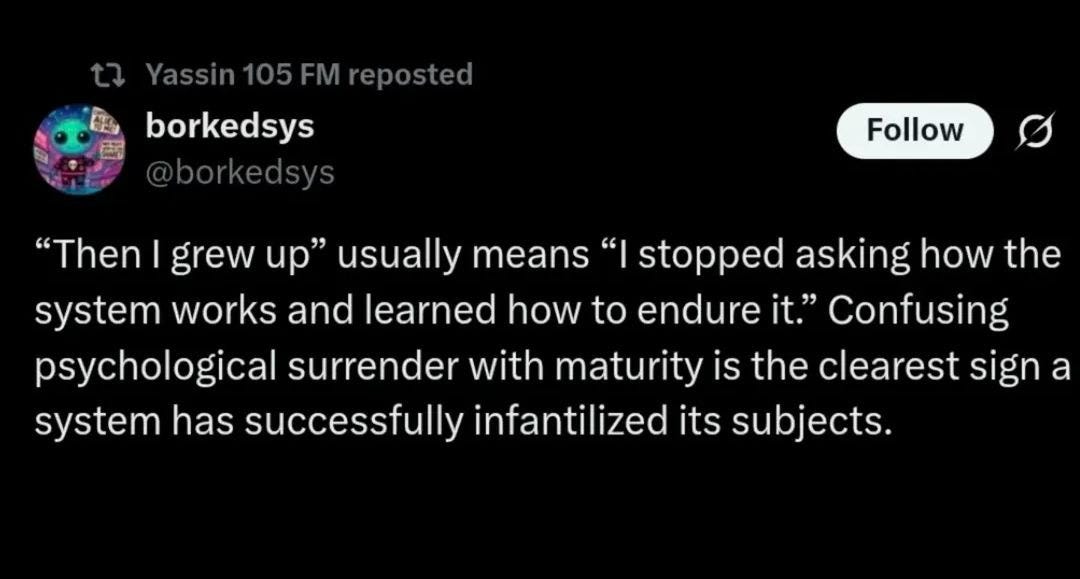
The introspection is not necessary, needless of jury. It’s wrong. It’s terrible. No moral compass can be degaussed into this direction. To coat it with ethical defence is all the more insulting, the grovelling is only a transgression of an unconfronted guilt: it is better to accept it for what it is, it is evil indispute. I shall commit to evil; and if I am evil, then so be it– but I confess only to the crime and not to the motive. I too must survive, right? In the race to the bottom I must jog along, inducted into a nightmare I did not lay to; am I not here the victim of grander conspiracy? If it is hardly one’s choice to be evil, thereof what evil at all can it be? Evil requires choice, a designated malice. Even then, I can hardly accuse the world of being evil, for even her hand seems forced. There is a marble-eyed child in all of us, the ethical voice on our right shoulder never really goes mute, it is only that we are learned of Pavlov’s beatings to ignore it; the sullen ‘grown-ups’ will tell you: “Grow up*! Welcome to reality. This is how the world works, this is how it’s always been. Either you perpetuate or you perish”. I hate that; whether it is the realists who disguise a nihilism, the nihilists who take excuse with realism, it is perhaps the dark tempting lull of jaded ennui which resides within all of us, it whispers a telling fear: it is an undeniable sympathy, it succumbs unto all of us, you too shall one day become as sullen, nihilistic, and self-serving– and the worst part, perhaps, it that it will not be in evil. Not malice but self-preservation; to feed a family, to raise a home, we choose to save ourselves and of what choice otherwise? Perhaps one day we too shall play homicide to the childlike dreams of others at once a time reminiscent of our own relent, generational nihilism unto perpetuity; it is the metabolism, the life cycle of tyranny– and therein we will convince ourselves that it is murder for the greater good, a jaded Love, “...for survival; to be a realist”, they’ll say.
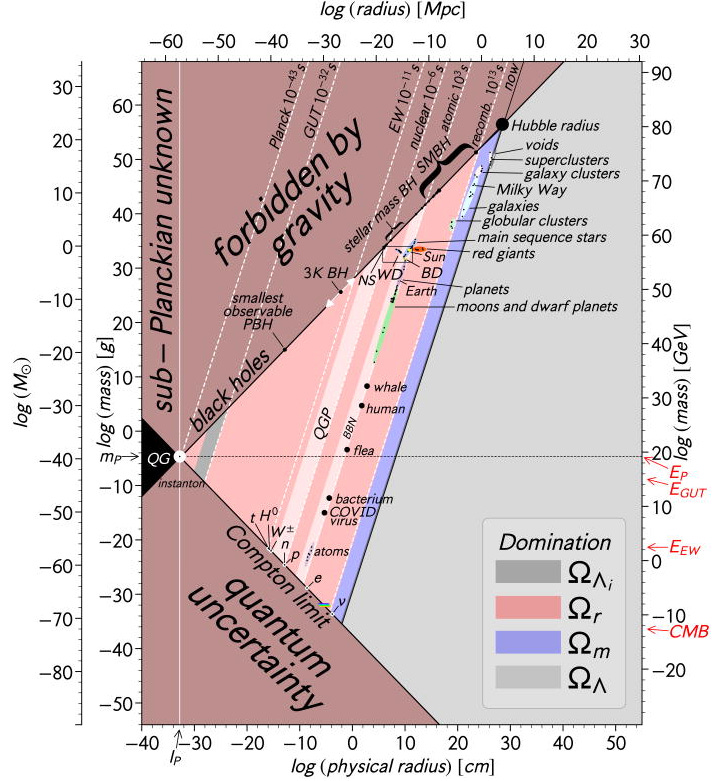
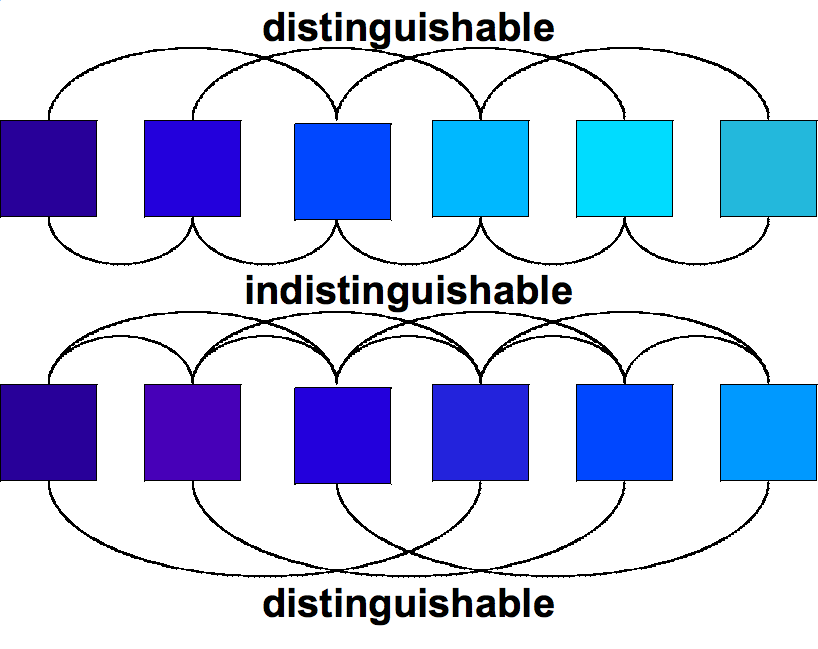
And they are exactly right, depressingly so; it is an honest argument, confessionary even. We must give credit where credit is due, Moloch has an excellent winning card. Clever does not suffice of its genius as strategy, to play unto the calculus of blame– delocalizing evil off the shoulders of any one individual, smearing, like the ghostly open sets of a topology, unto the continuum of a populace entire; we hardly notice as blame becomes a vanishing term in the arithmetic of evil. It leverages a brilliant blindspot, the human inconceivability that is the keyhole of scale through which our umvelt is granted: indeed, it is hard to palpate any honest difference between imagining a stadium of 10,000 people and a stadium of 100,000 people; visualizing crowd sizes is a humbling exercise, it is hard to imagine what 1,000,000 people would look like, to sympathize at such scale with sonder for each and every one of those individuals is hardly a realistic task. It is precisely this failure to reconcile the calculus between the convergently small and the divergently large which Moloch cripples atop of.
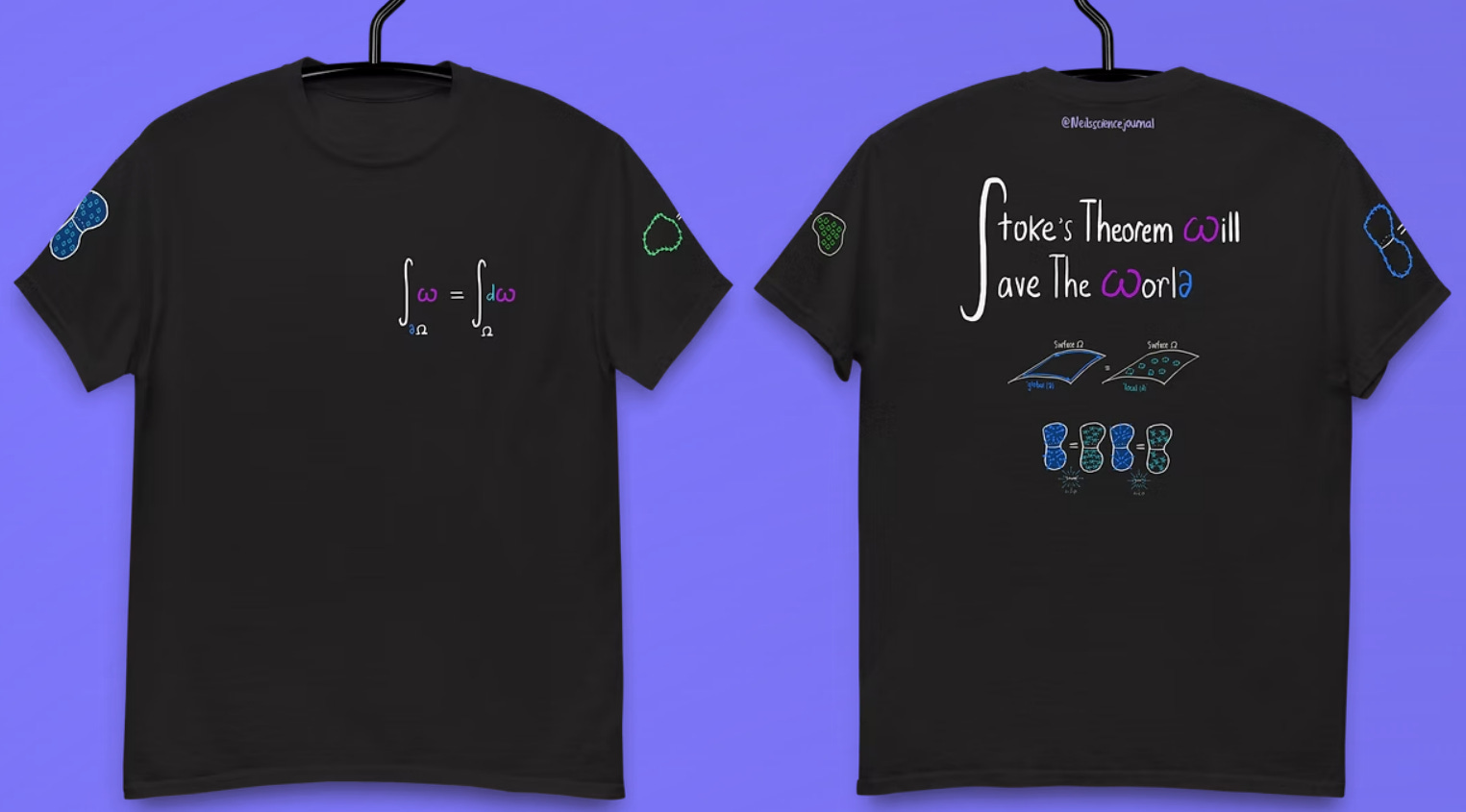
The straw-man of the evangelists shall have you believe that the study of the natural sciences is a desecration, a patronization of existence upon the insult that we are merely irrelevant flakes of dust, accidents, arbitrary in the spectre of eternity. The straw-man of the bowtie sciences on the other hand, the spiteful atheist, shall have you believe that any entertainment of theological, ontological queries of meaning, is a coping narcissism, a protagonist delusion of disgusting human self-centered grandiosity– the insult that we are somehow or another important, more than beggars for meaning, we are essential to the plot of this cosmic drama we call existence; a vanity sparked by chemistry and nothing more. As ever, perhaps the two extremists indulge in a secret affair; in the dead of night they meet and share embrace, a kiss under paradox’s mistletoe. The study of the natural sciences is neither of the above, rather both, simultaneously: it is of every meaningful scientific experience that brings senses of both, to feel so trifling and inconsequential in a vast universe, and yet simultaneously, to feel so canonical, inevitable as a product of existence. Thereof, the mystery of emergence: that we are so small, so insignificant, but a tiny protein sack of flesh on this blue dot in the sky– and yet we are also undeniably apart of the whole, so large, in the grand scheme of it all; the hemoglobin which makes my blood red was once forged in the bellies of a primordial exploding star. In that philosophical vein, I like often to say that perhaps Stoke’s theorem will save the world, compelling us with the unassailable hope to know that even despite our localized diminutive nature as cogs in a machine– that we are nevertheless not insignificant, bound at the hip unto the grand global structure of all things.
“The reasonable man adapts himself to the world: the unreasonable one persists in trying to adapt the world to himself. Therefore all progress depends on the unreasonable man.”
– George Bernard Shaw
“Life is nothing but a competition to be the criminal rather than the victim”
– Bertrand Russell
So? I quit. Out of cowardice, of cope, of clarity, I can hardly unproject whatever inclining suspicions you may or may not already have– so you are free to decide; not that motive here matters to much rhetorical substance. In any case, disillusionment or self-preservation, I shall claim the one thing that it is not, is apathy. It is anything but apathy; antipathy, there are very few things which evoke of me an animus to this degree of passionate hatred. As we shall come to see, over the next few hundred pages, it is one of my anti-fondest memories. There are a number of tame adages, and I do not claim that they extrapolate to unrelenting generality, as of any adage: there is the old “Carrot and the Stick”, there is the popular Cat, Mouse & Cheese study; the Mouse running towards (+) cheese (+) whilst simultaneously escaping (-) a Cat (-). I caveat against the Machiavellian extremism– of course, lest we submit back into Molochian destiny all the same– those unexamined truisms spoken to jaded entourage, those which glorify abuse as motivator. It is needless to comment that is not my semantic intention. We nevertheless cannot trivialize the role of fear, of aversion, if of this imperfect world we cannot rid of the negative– so be it– at the very least we shall make use of it; of course adrenaline serves us for good reason to run faster when pursued by animations of dread. In fact, of a rather recurring theme we shall come to now and again, I stand to claim that these negative spaces are often more substantial than their positive correspondents; of “Mapping the Silence”, we shall say, insofar as the drowned do not vote, silent witnesses remain witnesses– perhaps it is even the mute whom are the most important class of witnesses. We take a corollary, perhaps unjustified for now: it may be that one learns drastically more from mistakes than successes, inasmuch as there is more to be learned from the stick than from the carrot (again here, we shall be wary of the Machiavellian interpretations), it is the “champion’s fallacy”: it’s rarely clear why you won*, but always clear why you lost.
*Footnote:
Perhaps there is a shred of ML innuendo in there– insofar as “alignment” proves to be a rather nontrivial objective when it comes to training models. Rewarding a silicon brain, inasmuch as the neurotransmitters serve to reward our wet brains, are not very descriptive nor specific as to which of the ensemble of actions we are being rewarded for. ChatGPT, in training, is often rewarded for using its built-in calculator as to avoid the rather fallible arithmetical errors which arise from the architectural inevitabilities of tokenization; as a result, in 5% of all user queries, it will quietly open up its calculator, add 1+1, and do nothing with the result. We laugh at the poor bot, but after all, how different are we? The champions fallacy, as phrased, is something of a credit-assignment failure: whole societies have been built upon these very same hazy conflations of success, the rituals, the subconscious tics of clicker conditioning, the superstitions, the cultural hypnoses, the unquestioned conventions.
“Fear is like a fire, you can cook with it or burn your house down.”
–Cus D’Amato
In any case, should you take it from my exaggerated cautionary remarks, it shall be hardly my intention to spend all so many of the following finite precious pages on a constructive criticism made only of laments. That would be little more than shadowboxing with pessimisms, which is ever always easy enough, and thus all the more unproductive– perhaps even unfair, insofar as wrestling with strawmen rarely produces fire, and the criticisms therein perhaps nothing more than all the ringtones you have snoozed before. We go, therefore, by proof-by-contradiction. Indeed, I cannot imagine that it would have been of any fun to dismantle the “résumé” explicitly; of all the more engaging and lucrative an exercise it will be, to walk the talk, as they say– even if that objective is up to its very own failure. The point of this writing shall be something of an attempt to write such a “résumé”, at least what we imagine any functional one ought be: a sufficiently expressive text that satisfies a finite covering of all of my characterological assets. And thereof, unto a demonstrance by reductio ad absurdum, ultimately show that the task is impossible (the résumé is not a compact space). Moreover, it shall even become clear that the argument holds up to infinitum: that is, for even in neglect of the canonical “résumé” constraints, that the task shall remain nevertheless impossible even up to any arbitrarily high budget of language. And therein the finite case is all the more reinforced of moral tensility, a fortiori. The reader shall be keen to observe that we have taken some shameless liberties of inspiration from Wittgenstein, and in perhaps so many more ways than one; indeed the argument, whether to read it or not to read it, endorses its very own paradox, engendered from its own faulty conclusion thereof: if the argument is true, then by self-application this essay shall be nonsense and needless of reading; but for it to be true that this essay is indeed nonsense and a waste of a reader’s time, it is necessary that the argument is true– and perhaps needful of being read for the conviction thereof.
In any case, provided the fact that if these words are at all being understood: that you must be reading, for what reason I cannot say. We give an ever so vague sketch of the proof. We show that it shall take a lot more than a mere few pages (and then some) to say all I’ve got to say about even the otherwise uneventful short 22 years I’ve lived thus far. And that even by that end– however many unseen pages that might be from now– I shall nevertheless fail, I claim that I will fail, I hope to fail; I need to fail, and not merely just for the dignity of having written this all, but for perhaps reasons of even greater moral impetus, I am almost of minimal exaggeration to say that the autobiographer’s Élan vital very much counts on this failure. Provided the arrogant prescient confidence that this argument shall all pan out as we hope, that we are able to prove this theorem of inexplicability, we can speak of some simple corollaries– and obvious, simple, as they may be: they are very well the true moral aftermaths, it is perhaps the corollaries which are all the more important to take home from all this. If indeed, it is true– as Dostoevsky had remarked earlier in the foreword– that there is no volume of pages, no novel which can be written, if the Delphic maxim to “know thyself” is unattainable through no finite amount of elaboration even in automorphism: then what ever shall there be to the hopes of expectation, so even the hubris, that any other will be subjugated to understanding– us to them, them to us? What hope is there for us in relationship-conquest, if even the identity-mapping, the most trivial of all cases, remains unsolved. It is the fool’s errand, and yet, an important one. This seems a no-go theorem, I claim it is anything but. It shall turn out to be rather liberating.
“This book will perhaps only be understood by those who have themselves already thought the thoughts which are expressed in it—or similar thoughts. It is therefore not a text-book. Its object would be attained if it afforded pleasure to one who read it with understanding [...] Its whole meaning could be summed up somewhat as follows: What can be said at all can be said clearly; and whereof one cannot speak thereof one must be silent.”
–Ludwig Wittgenstein
Where to begin?
Gauss had the rather wonderful saying which I shall come to fancy in some thematic depth for what follows in this ensuing introduction: “I have had my results for a long time, I do not yet know how I am to come to them”. There is certainly an ambiguous mood to it; whether he praises the serendipities thereof to reason as an auspicious omen to patience, or if he cries out to the despondent aimlessness of investigative purpose. In any case, for better or for worse, it is true– that life is often parametrized in reverse– those of the most substantial results we derive in ortholog from an almost retro-causal motivation: it is the conclusions which come first, the motivations and rationales follow, and rarely soon after. Confirmation bias, then, is hardly a pathology, it is perhaps the natural state of the human experience, only up to its extremes of course– water is natural, and yet in excess we drown. Perhaps, even, to sanitize of all such biases is therein only to dispense with humanity itself: that to be perfectly objective, that machinistic propagation with nothing other than reason, we would cease to be human– whether for better or for worse. The middle-school science apparatus can already be heard howling with caution and criticism: how dare he so casually take up such iniquity! We as scientists must always wed to our rationalities, herein we make no room for guesses, for bias, for non-empirics; we as scientists preen to a gnoseological purity, we are fair, judge, jury, and executioner of fact! As of most childhood fairytales, Santa Claus and the rest of his troupe, it is unfortunate that I must here pop cherry of the fanciful: the scientific method, as taught, bears hardly any fruit unto the scientific endeavor in practice– and it is even for good this way, had we not forgone this naivety in neglect of personal aesthetic bias, we would not have the likes of Dirac, Einstein, Ramanujan, Fleming, … in any case, this is a lament we shall return to in due time.
“The Heart has its reasons for which Reason knows nothing.”
–Pascal
It is usually of greatest commendation to a Mathematician that they have struck upon trove of great generality; Gauss hardly needs my praise here. I give it to him anyways: his remark generalizes so well that I fear it shall soon be printed on gift-shop T shirts demoted unto a corny truism. It is true: whether in Mathematics, in Science, or otherwise, it is not at all uncommon to discover rationalistic motivations after-the-fact; in fact, by some divine comedy, it is almost as if we must work to discover the why’s behind our actions rather than to source them as atomic propagators of our will; they serve more as rewards of investigation than motivators thereof. Thus far we have spoken of the quote in a “Bacon vs Descartes: frog vs eagle, rationalism vs empiricism” sort of way; I tend to think it holds even to a pre-scientific context. To talk of curiosity, of interest. There is a way in which curiosity serves something like the precursor to science, precursor to research, precursor to any intellectual undertaking for that matter. Science is the endeavor by which we go about answering questions; how, and whereof, those questions we ask come from, however, is precisely this meta-science of curiosity.
Perhaps I shall be somewhat heretical to propose an epistemological favoritism, that some interrogatives are more natural, more antecedent to others. Of the many W- words, the what’s where’s which’s whose’ when’s, would I be so remiss to suggest that there is a clear superior? Of course there is merit to the what’s, I can hardly do without them as any other, it is perhaps even the most dominant interrogative of a scientist at least in volume of query. I claim however, that 6-inches from the mirror, toothpaste foaming at the mouth, it is the why’s– of motive, of inspiration, why, they do what they do, why they are interested in what they are interested in, why this question and not another, why this line of investigation– it is this interrogative which is all the more important and satisfactory in development. It is also, granted worth its weight in reward, the most difficult one– the most unsubmitting to being well-posed, it is tautological, at times silly, and certainly the most evasive of the interrogatives. Of interest and fascination, at least, there is an axiomaticity to it. As both source and consequence of those undertakings we resolve towards, there is the old adage: “the grass is greener wherever you water it”; we develop interests in the things we do– which things do we do?: well the things we’re interested in, of course! Tautology. I must admit to a Voltaire’ian deity, it can be often a cruel comedy. You don’t know what you don’t know; we can only ever really know whether something interests us, after, having taken the initiative to learn it– and learned properly, deeply; this takes time, lest of any premature conclusions. O to speak of all the same, it is a rather romantic paradox: the first date is inconclusive, and so is the second, and so is the third? … by then, you might just find yourself having fallen in Love*– and perhaps precisely on those accounts of effort expended therein. Perhaps we come to find interest, order, in those things we have invested an entropy unto– it is self-fulfilling, is it? Or are these delusional romanticizations of a sunk-cost fallacy.
*Footnote:
We shall speak to the axiomaticities of Love, in much greater detail, in an ensuing sub-sub-chapter. In due time.
Lest we generalize without cause, by an admittedly fallible personal anecdote: there was something of an acquired latency in discovering my fascination with Chemistry (“You don’t know what you don’t know” = ignorance²), and further exceedingly late for me to discover my fascination with Mathematics and Physics– which, as it happens, and most particularly with Mathematics, is by some tumultuous necessity unrevealed of its true nature until deep into university; the “Mathematics” one experiences in highschool is but a denigrative facet of arithmetic and tedious calculation not representative of its true nature (whether this delayed revelation is a pedagogical necessity, or a societal misfortune, remains to be discussed in greater detail for much later). It is hard, impossible even, to convey the rewarding beauty and interest in the Einstein Field equations to a middle-schooler who is– needless to say– some decades away from its conception; a youthful student’s choice to pursue Physics in this manner is ultimately one of faith: they do not know what they do not know. To expect of any given highschooler a commitment to the study of Physics is a rather forceful hubris, surely we ought not to encourage these dispositions, to feign satiation for those suppers yet unsuffered for. Nevertheless, I concede– to the nature of nuance and necessary hypocrisies. It is true, though we should have the tame and humble expectations that interest, passion, shall manifest naturally with a patient latency– we cannot so casually discount on the other hand the existence and even ubiquity of curiosity’s le coup de foudre: the proverbial Love at First Sight that strikes us promptly and confidently (and yet even so, I think with some mystery, it has its own salient crypticity). There is hardly even an issue of their coexistence, both the slow burn and the Love at first sight can exist; perhaps even each with their own merits, flaws, archetypes.
I can’t be entirely sure when it was that I first became aware of Ernő Rubik’s famous 3×3×3 puzzle, on account of its cultural ubiquity– it’s just a canonical familiarity that everyone somehow or another has come to know of at some undisclosed point in their lives. I can remember, however, that it was only until an otherwise uneventful 8th grade summer vacation that I was stroked by the fever of boredom to actually pick one up for myself; there is no moral here, it was mere spontaneous compellation– in some part perhaps by sibling rivalry, amongst other unknown forces– taking charge in the gift-shop of some apocryphal museum (a tourist attraction of some kind, precisely what I cannot recall). I cannot say particularly why I had never picked one up before, nor why even so minor a change of heart struck me then; perhaps a latent insecurity, intimidation, it was known to me even then the existence of so-called “speedcubers”: they were people that I had hitherto considered to be some sort of prodigal geniuses, it is the general attitude for what most mortals think of the toy, of course at first glance entirely palpable– what other than supreme mathematical genius must be required of unscrambling such a codex of chaos, beyond me surely. I was mistaken. It is both empowering and embarrassing, I think, and thereof a kind of humorous relief, to learn that the intimidating barrier to entry through to so-called genius costs not much more than an hour’s worth of a YouTube tutorial at the dinner table; perhaps relief is not quite the right word, veneer unto the absurdity that a task which many people will render as the epitome of impossible intelligence, actually, takes nothing more than a few hours of the late night (albeit with an ample dose of frustration and patience). The goliath made of paper. All 4.3×10¹⁹ combinations (~100× the age of the universe in seconds, 4×10¹⁷; pragmatically infinite, effectively) defeated by a YouTube tutorial; it is hard to stifle a laugh of the vulnerabilities of so grandiose an object, said not in patronization, more so in false idolatry.
*Footnote:
Although, solving it in speed, is another beast entirely. Learning to ride a bike is one thing, winning the Tour de France is another. It would take me the following year to cut my solve time down from 1-2 min down to my current average of 23s– which is no brag, still quite slow apropos relative communal standards, you’d need at the very least a sub-10 time to even dare compete at most levels.
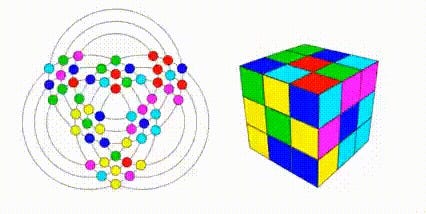
The allure was immediate, and arcane, for precisely the fact that I had no clue why it addressed me with obstinate attraction. I simply did not have the language (nor should I have had) to explain to myself, much less others, from whence that interest came from. It’s not as if I should have taken it upon my 8th grade-self to pick up an abstract algebra textbook (or maybe I should have; perhaps the state of Mathematics would be in much greater health if Group Theory were a middle-school Maths subject). So be it. The inability to parse into language the atoms of fascination is perhaps what keeps the mystery resilient to a reductive indifference; perhaps it is for the better that such words escaped me at the time. For the itch of what exactly was so fascinating about the fact that my palms were beholden to a chunk of complexity, an object vaster than the stars, at the mercy of my measly human hands reigning upon it a deterministic law of magic. We present here a stunning fact: it is known, no more than 20 moves are required to solve the cube from any given starting scramble; God’s number, as it is rather fittingly called.
*Footnote:
Though deducing what exactly those 20 moves are:= “God’s Number”, for any given scramble, is not humanly possible– that is a computation left to silicon I’m afraid.
There are only about 10⁸⁰ protons in the whole of the observable universe. Though this is an astonishingly large number relative to any sensible human-scale, Mathematically speaking it is closer to 0 than it is to most other integers. A rather tame example might be Shannon’s number– the estimate on all possible chess-games– which hovers at around 10¹²⁰, or the 52! ≈ 10⁶⁷ permutations of a deck of cards. There are various other Mathematical quantities which seem to outsize the “Physical” size of the universe itself: Graham’s number, Tree(3), Busy Beaver numbers, etc. It is somewhat epistemically baffling, that the Physical universe contains Mathematical objects larger than itself. I like to think of it somewhat as an embedding of a sort, that is, that the larger space of Mathematical objects is somehow or another topologically embedded onto the smaller space of our Physical universe. “The Universe contains numbers larger than itself”, and not only that, but– as Einstein had once wondered, “The most incomprehensible thing about the Universe, is that it is comprehensible”– that the human mind is further able even to contemplate such Mathematical objects. I can write down Graham’s number on a napkin, contemplate what it means, and yet– if every subatomic particle of the whole universe were turned into a computational bit, it would be unable to calculate precisely what that number was. In fact, if we are to take Shannon/Wheeler’s “it-from-bit” to calculational verbatim, even the mere informatic density of such a number would quite literally collapse my brain into a black-hole if I were ever to try and comprehend such a number. And yet despite all of that, in the gravity of such a number, with all but some clever modular arithmetic: we know with absolute certainty that the last digit of Graham’s number is 7.
There is something beautifully uncanny about that– the incompressibility, the density– of holding an object so violently complex, and yet simultaneously, so romantically ordered. Of course now, I could mumble something about Lorenz’ian chaos here, maybe something about incomputability, complexity theory, sprinkle some waxing lyrical about entropy or whathaveyou– but I didn’t know any of this then. I had neither the words nor the ideas to express what precisely it was of this beauty that was so alluring to me; it was fascination at first sight, and for good reasons that would remain (rightfully) ineffable for many more years.
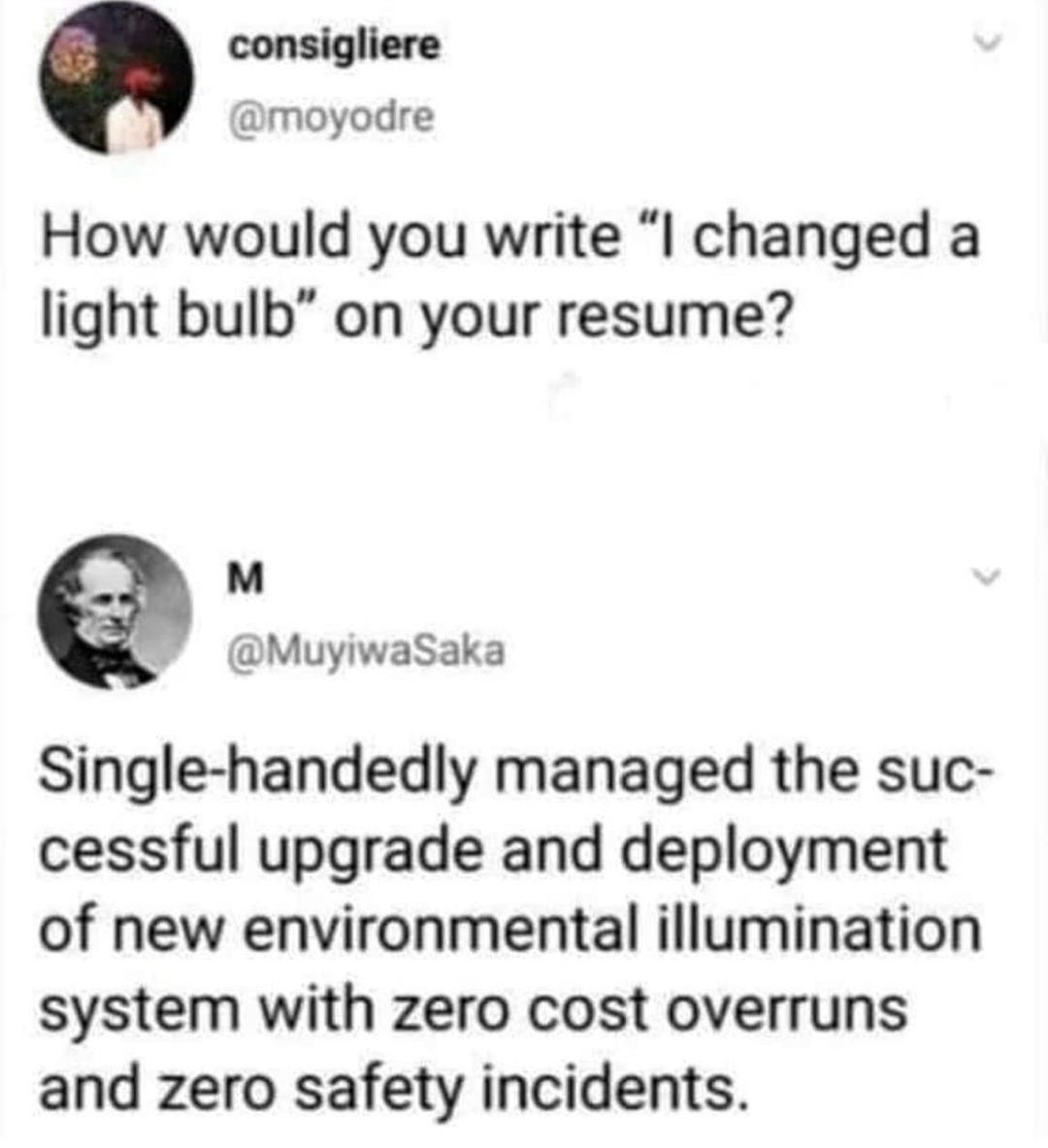
That is, what you wanted to hear– right? The cliché origin stories we give at TED talks and speeches, the careerological version of “How I met Your Mother” stories. The “one day I came upon a Rubiks cube… and that’s how I fell in Love with Mathematics!”s, the “one day I saw Messi on TV… and that’s how I became a footballer!”s. Are there partial truths to such origin stories? Sure. Though perhaps such heuristics of passion– as harmless and superficially performative as they may be– are rather disingenuous, if even only hardly pernicious. It is a kind of careerological pornography; as if passion were ever so clean and simple, so deterministic, so fortuitous, serendipitous yet clear. We all love a warm feels-good Hollywood love story, the good reliable old plot: girl meets boy, love at first sight, picture-perfect picnic dates and champagne dinners, the climactic drama, the big fight, the make-up kiss, the happily-ever-after. It is not even simply the heresy that one should not have such unrealistic, fairy-taled, expectations of our romantic lives, but perhaps that one should not want one at all; paradoxically, there is a beauty to the ugliness and messiness of Love in the real world, there is an excitement in the banality– perhaps more excitement than troped novelized dramatics could ever serve. We take the same argument to passion: I claim it that you should not– and in fact, do not– even want a Hollywood canon to the story of your life; the Hero’s journey is cool, but it’s not that cool, the fact it serves as a storyboard trope at all is a testament to its vapidity. There is a beauty to the rollercoaster of passion: the origin-stories, the fall-outs, the romances– yeah, but also the boredom, the inaction, the monotony, the hesitations; somehow I find this banality-of-passion much more interesting.
There is of course no amount of that personal fascination and intellectual sentimentality, which could have ever possibly been conveyed to any such parchment or post on LinkedIn– save for, of course, had I bastardized it into some ritualistic incantation, say: “I am well pleased to announce that I have just discovered an inordinate fascination with the Mathematical complexity of a 3³ hexa-colored non-abelian puzzle and learned how to operate Jessica Fridrich’s group-theoretic algorithms to transform any one of the 54! states of the permutation group 𝑆₅₄ to just one particular state from an arbitrary choice of bijection 𝛼: {𝑓𝑎𝑐𝑒𝑙𝑒𝑡𝑠} → {1, … , 54} in just 48 hours!”. It is more than melodramatic, perhaps it is rather detracting. It is, being honest, a party trick– however trifling, and however profound even those trifling party tricks may or may not later rise to vocational incumbency. I needn’t speak of it in group theoretic terms to give it at least a hobbyist’s justice, the abstract algebra is interesting of its own right– surely– but we can hardly insist that it is necessary (of course, it certainly wouldn’t hurt. Contrary to the disenchantment one may expect, learning what goes on inside the Magician’s rabbit box: I think the magic show is only ever interesting, on account of the subscription that what you are seeing ~must have some clever explanation; to go to the magic show believing that there are genuine blackholes and human bissections going on, would not be so amusing actually).
“I may not have been sure about what really did interest me, but I was absolutely sure about what didn’t.”
–Camus (The Stranger)
*and even then… I can’t be sure I agree with Camus about being absolutely sure
“Writing is like driving at night in the fog. You can only see as far as your headlights, but you can make the whole trip that way.”
– E.L Doctorow
To use a Chemical analogy: it is a kind of retrosynthesis, this distillation of fascination and interest, it is nothing short of art; and if to speak to greater generalities, thereof the Kierkegaard’ian fashion to “live life forwards, though it can only be understood backwards”. The archetype hardly finds difficulty to resemblance unto the many walks of live, whether it be the journey to discover one’s passion, an algebraic derivation, or even the process of writing– there is a kind of courage one must take to drive through the unreliable fogs with only your headlights, to leave clarity on the expense account for retrospect with a faith that those debts will come paid. Should I risk any tones of conceitedness, it is not a philosophy which requires any subscription, really, it is what it is, whether you like it or not, we are all victim to serendipity; to drive in the fog is really all we can do, it is delusional to expect of anything else, clarity if not fantasy is only a luxury. To the account of many Nobel laureates and otherwise senior academicians: it is, indeed, very often up to serendipity– the lucky wrong turns, the trips and the falls– for motive to reveal herself as to what it was that was so ephemerally attractive about a field/topic to begin with. The why’s may not be what gets us going, the why’s are what we seek to reap and sow for getting there; “perhaps the reason to live life, is rather a tautology. The reason to live, is to find reasons worth living for”.
The claim here is rather sterile, it is hardly unobvious. This kind of retrosynthetic discovery of curiosity– this backward crystallization of fascination– if only of the most seasoned scientists and Nobel laureates alike cite it as a totem, the very soul of intellectual life, then surely we are of grand remiss to expect of our acne-riddled teenagers an articulation of fully-formed passion on demand, factored through those extra-curriculars we have stamped as ready-made for college acceptance. If even the titans of scholarship speak in reverence to serendipity, of stumbling into insight through the unplanned and the unforeseen, then let us dispense with this cretinous nonsense; if only next we expect paperwork to be signed by newborns, speak your vows before you’ve even met your date. Let us not kid ourselves. Wiser heads are not needed to call on the disillusionment: on synopsizing a story which has yet been unwhet of ink, it is ridiculous– but this is obvious. Of course it’s performative. Writ large: you know it, I know it, the admissions committee knows it. Of course it’s performative: though, and ever worse, it is performative up to subconscious custom, it is so performative that it has become the norm– and thus even natural. And even thereof it is perhaps the fraudulence which is the least in severity of the crimes entailed; Dostoevsky would say that it is the tolls on oneself which are most grievous of the lies we tell. Here that much is true. Of course there are the illnesses made of the cunning sociological pressure cooker: the competitiveness, the cut-throat, the extra-curricular waterboarding– I can hardly contest that. I claim, merely, that the more substantial moral disease which shall leave in age a more impactful crater: are the lies of self-deception, where we shall grow up into a society which has dosed itself to dissociative amnesia, one which has forgotten what it Loves. Perhaps it is true that knowing how to conjure crocodile tears all too reliably shall only forget you of how to cry with earnesty.
It is the asphyxiation of putting fleas in a jar, the veneer of inspiration. It is more than just stifling in this respect of self-deception, unto negative externalities which corrupt. To others, yes– but more importantly, to the self. Be that as it may, with my pessimisms voted aloud: it is rather human practicum to cheat in preference of surrender; to promise and underdeliver is a humiliating sin, so lie, underpromise and try to overdeliver– and if you can’t, well make some sh#t up! Our unreasonable expectations, through the bizarre calculus of human behavior, encourages only all the more unreasonable solutions. C’est la vie! As a young, naive, and confused highschooler, it is much easier– and often far more rewarding, to a Machiaevllian fault– to select a passion ad arbitrium and build a curated persona around it ex-post-facto, rather than do the uncomfortable and unmarketable work of introspection through banal uncertainties and helpless naivete. It would be easy enough to look the other way had this not surjected a destructive consequence of our young and brightest: we proclaim with such devastating casual blasé to fake-it-till-ya-make-it; and what of those who practice the lie into second nature? Those who undress behind stage, only to find that they have become the costume: that they have faked away the person who dreamt to get on stage to begin with.
The very essence of a good platitude– in this case: “Love the journey, not the destination”– is that it must hold a paradox at its core; it is precisely this paradoxical balance between antipodal contradiction which gives its profundity. Taken earnestly, of course, we may spout an endless list of truisms on how it cultivates presence and patience; taken blindly, it is nothing more than platitude, it risks entrenching us in a loop of aimless motion– therein we come to mistake means for meaning. Sure, it can be wise to let the means inherit some of the dignity of the ends– to braid unto method as its very part of the purpose, is even admirable, we shall not contest this. The danger herein, is when the braid is mistaken for its entirety in substitution: when the journey stops being in service of the destination and is ever so quietly promoted into its counterfeit. Of course, should we bastardize this truism to its naiveties, of any scholar: they do not study merely to be– or worse, merely to appear– intelligent, but out of a drive to pursue some animating question– a mystery that demands unraveling. Anything otherwise, would be sheer narcissism. He who reads to impress, can hardly at all be said to be reading. It is all but a reversal of the natural order.
Guido van Rossum once advised of the same in learning Python to young programmers, loosely:
≈ “First find something you actually want to do with it. One shouldn’t learn the programming language just for the sake of it. First find some problem you love, a problem you are motivated to solve. Work on it until you reach the precipice of realizing that you need to learn python to continue, and there you will find seamless progress on your means of learning the tools to reach the end”.
“When a Measure becomes a Target, it ceases to be a good Measure”.
–Goodhart’s Law
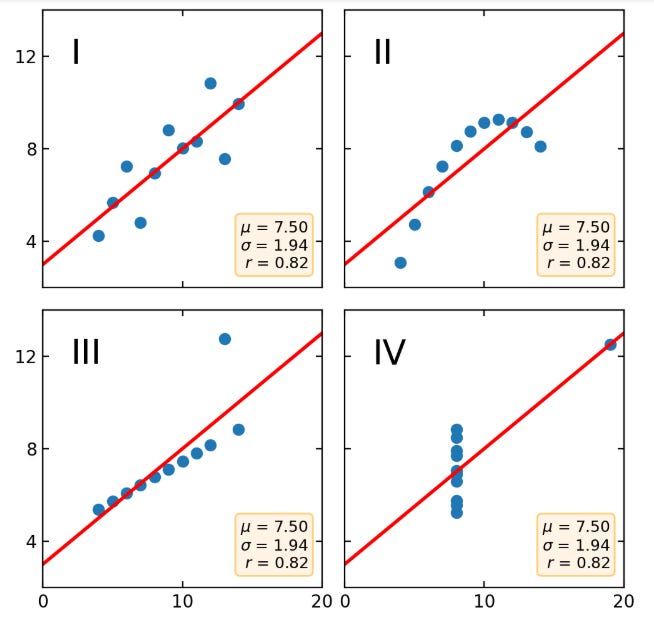
It is an ontological collapse. The goals and means, coaxed into subtle surjection onto a perpetual aimlessness. I suppose it is a kind of teleological blunder: it is all too often, perhaps it is even something of a universal experience of any strivation– rite of passage, we begin to confuse the virtues cultivated along the way for the pursuit itself, mistaking byproduct for aim. We work hard for the sake of working hard; we study merely to be “smart”; we practice rigor merely in appease of discipline. Instrumentation falls victim to its own autophagic idolatry. It is precisely this inversion, a Sartrean laugh must be stifled here, which animates the résumé pathology. It possesses, invites of the worst alas of Goodhart’s curse. Achievement bastardized for its own sake; the ledger of pursuit is thereof it’s own pursuit of ledgerization. The résumé becomes a goal in and of itself to fulfill; therein the résumé becomes not the afterthought, it becomes the motivation– alas, the traveler whose photographs are no longer for the destination, at least not as much as the destination becomes for the photographs; the photographer, in quiet confession, sighs– to travel is a chore.
Therein lies the trap, it is so canonical in fact that it deserves nomination; it bears of some resemblance to the chemical engineer syndrome*. There is a kind of seduction whereof we wary ourselves not to put the cart before the horse, it is a reassuring cope we often tell ourselves, to dip our toes in the pool before making commitments; the serial philanderer knows, of the perils in “checking out one’s options”, alas it always seems that the grass is greener elsewhere, moreover, the regrets on passing over the ‘right choice’ many choices ago (re: the fussy suitor problem; there is actually a mathematical solution to this conundrum, the optimal strategy is to indiscriminately reject the first 37% options, just to gauge what’s out there). Alas, we tell ourselves, “first I must… I can figure out my earnest interests later”– and indeed this seems to go on forever, seeking entry to college, then “I just need to pad my grades and some internships… I can figure out my earnest interests in grad-school”, then “I just need to churn out a few more publications… I’ll do the research I really want to do after I get my PhD”, then “just need to write a few more books… I’ll do what I really want to do once I’ve made tenure”; Sartre spoke of living a toothless life, waiting, reserving– delaying the very delay of gratification– only to find that the ascetisms claimed your molars before the nectar even had a chance to rot.
*Footnote:
The “Chemical Engineering Trap”: a young student who tragically discovers mid-way through university that Chemical Engineering has very little to do with the flasks and test-tubes of chemical synthesis, and more so to do with the thermodynamics of pipes and boilers of industrial hydrocarbon refineries.
Indeed it is in most things that “I’ll figure it out later” routes to a fatal detour– we are all guilty, shall I be trite to call it what it is: procrastination. This is of course no different. A fasciculated half-hearted pursuit, subject to long torment of the “neighbor’s-grass-is-greener” fallacy; that is, by another analogy: the hunter’s sights inundated by a flock of fowl– with a rifle pointed at so many available targets, you may just end up not shooting any of them at all. Decision paralysis; of the highschooler and their all too quiet reservations, beware, for it leads to a kind of impotence. It is this seed wasted on pseudo-commitments, on faux-choice, given up to an excessive freedom which lends to no freedom at all; indeed, it is possible to feel trapped by liberty. The trouble with indecision, the indiscriminate gluttony to order the whole buffet, is born precisely from the pressures of the résumé– forcing the hunter to hurry their shot amongst the flock which would have otherwise stayed put had there been no extenuating pressures to bring home a meal. To live life peering out windows, too indiscriminant in candidacy, always ready to jump unto the next-best major to transfer to. And there is perhaps a rather paradoxical resolving adage: “maybe the grass is just greener wherever you decide to water it”– that is, that the story ends palatably no matter which path you choose, that you truly do end up fostering an interest into wherever you invest, since it is precisely this amount of sacrifice which inherently gives something value as its consequence; to choose arbitrarily, for in the end we will always end up Loving what we sacrifice for– “Love is not found but built…”.
These days, of credentialist porn and motivational simulacra, it is all too often we hear to the TEDtalk advisories on “finding one’s passion”; it fails to the very premise, advisory of such a nature is its own broken teleology. It is in the inherency of passion: it cannot possibly be algorithmic, it is in its very nature in-advisable. It’s not easy, and it shouldn’t be, couldn’t be; if it were so easy, to procedurally go through some spiritual checklist, rub your hands and click your heels twice, and instantly materialize in your hands the elixir of your passion… there would cease to be any meaning at all to the fervor of “passion”; it would simply be an attribute like any other– like “discovering” your blood type, your eye color, or your height. I speak for myself thereof, it is hardly worth parading; even despite my obstinate le coup de foudre curiosity for Biochemistry very early on in Highschool, I simply couldn’t, nor shouldn’t, have possibly known enough about the field to fathom why it interested me– is that for fraud or for function?
I profess, to grant of confessionary relief to my self-conscience: it felt, dishonest, unfaithful even– for lack of a better word, “infidelity”, feels somehow or another the closest choice; the careerological equivalent to coming home to a faux-marriage, sunk-cost with kids, a home, and all. I had effectively been conjecturing lies about the origins of my passion on university applications. I truly did love BioChemistry; I just had no clue why. And for that, I felt like a fraud– or worse: a fool. And I was right, fool I was, but perhaps more so as feature than flaw. The irony is that it sounds nothing more than the truism we had just earlier protested (I contradict myself, very well! To express oneself with honesty is necessarily to encounter one’s own hypocrisies), nevertheless it is true, that the true beacon of intellectual curiosity is not in the Love for knowledge, but rather in the Love of not knowing– the reverent idiocy of it; I like to think Prince Myshkin was a Scientist, that is, in the most benevolent terms– there was a pride in his idiocy, a quiet dignity in his foolishness. Scientists are often advertised as addicts of knowledge, I demur: they are more than anything masochistic to their ignorance. It is a poor business, of which we shall– more each day than the last– grow insolvent for. Though there is some valiance in the fool’s errand, as are the inevitably doomed contenders against the Lernean Hydra: a beast most docile tame when unattempted– and yet, fully knowing this– persisting nonetheless to decapitate it in birthing even greater insurmountability. The contract in commencing upon one’s intellectual pursuits is as bittersweet a letter of resignation, to never again work with as much intellectual satisfaction as you have now. It goes downhill from here. Ever deeper insatiability with only ever-more scarce sustenance. If you came here for the food, it’s best you turn back now. Here you will love hunger, for even to beg feast on your ignorance in pursuit to starve oneself. She is a losing game, nevertheless, we play; do we play in despite or because of the fact that it is a losing game?
“In our probing of things in the Universe (mathematical or otherwise), we dispose of a crucial rehabilitating power: innocence. By this I mean the original innocence which we have all received at birth and rests within us, often the target of our scorn and of our deepest fears [...] Discovery is a child’s privilege. I mean the small child, the child who is not afraid to be wrong, to look silly, to not be serious, and to act differently from everyone else.”
–Alexandre Grothendieck
“Besides, nowadays, almost all capable people are terribly afraid of being ridiculous, and are miserable because of it.”
–Dostoevsky (The Brothers Karamazov)
“I have had my results for a long time, I do not yet know how I am to come to them”, Gauss said; fascination is perhaps the discovery unto discovery, it is the eureka to which eureka is born. This is hardly an unpopular interpretation of curiosity, it is in fact so ubiquitous a remark that I am comfortable leaving it an apocryphality unto almost every great investigator of nature, who has at one point or another spoused something akin to: “to find the right question to ask, the appropriately fruitful hypothesis, is more than half the battle”. Thereof, finding such fascinations is perhaps more a destination than launchpad for departure– and we have good reason to take this advice, to even those nonscientific undertakings. The discovery, the cultivation of oneself towards curiosity, is perhaps in some ways the research therein of each and every person’s personal meta-science, to discover within oneself the notions we seek to unearth of the world; I suspect it is for this reason that Grothendieck was notorious to bristle at casual praise of his “research.” “I am not doing research,” he would say, “I am merely cultivating myself”.

There is a riveting patience of such discoveries– or meta-discovery, rather (indeed [sic] that is oxymoronic charged with intent: the exciting suspense of mundanity). Endurance doesn’t quite nail the semantics, there is hardly anything about twiddling one’s thumbs watching the fish go by in a dentist’s lounge which even faintly resembles epiphany; oh, here my name has been called, it’s my turn for journey and grand enlightenment! Daydreaming is not the right word either; there is an oddly phrased though awfully fitting Spanish idiom: “Thinking about the immortality of the crab”.It is only fitting that the study of the natural sciences is much akin to nature in expedition, of a sail, of a great climb, hike, whatever it may be. There are moments of breakthrough, moments of forced resignation, and all too well there are times of retreat– any sensible interlocutor of nature should have wiser heads than to challenge the elements, the conditions permit your summit more than your personal abilities ever contribute. Sometimes there are entire sequences of months– dare, years, decades!– which frown unto periods of bad weather; I shall borrow an analogy that we will entertain in the future. Terence Tao likens it to a rock climb: sometimes we must wait, for others to make way, clear some road, affix handholds– the stubbornities of such cases amount to nothing; determinantion, will, resilience, these are irrelevant grasps at a problem apathetic to ego nor resolve, it simply hasn’t the maturity to break into comprehension. It can be lonely, trapped between base-camps; like frogs we take refuge on the lilypads, in a pond of a vast unknown unknown, there is no telling where the next checkpoint is– if there is one at all, perhaps we are at a dead end. They are like stepping stones, serendipities, partitioned by aperiodic lengths of time and energy; it can often be a despairing aimlessness to migrate the tombs of open and unspoken thought. It feels often a hopeless map onto an insurmountable cardinality, the tangled topology of one’s own mind.
Yet in the end– and, that is, if such an end is to be found at all– it reveals unto something quietly spiritual, the materialists shall hate to admit this so I confess on their behalf. The disordered yarn experience, knotted and frayed though they seemed, a trust in homotopic amalgam. Maybe you make a few wrong moves in the interrim– nothing that can’t be undone! The reidemeister moves have a timeless resilience of their own. So? You walk the neighborhood block enough times and the shoelaces come undone, sure, somehow or another. The caramel of those ruminations left in the soft annealing hands of patience, a genuine Love for idea which is not lust for innovation; it is observation, not production; conspection, not conscription, not construction. There is a homotopic inevitability in the aimlessness. The group of all possible wanderings perhaps gives very rise to the structure we find thereof as the mystery we sought all along relative to endpoints, from query to epiphany; the aim to aimlessness. It is perhaps not enough to simply lose oneself of home, of the detachment to place in the singular– but lieu, as the vagabond, to see the whole existence of the world as home; indeed, the vagabond never leaves– by very definition, if only a vacuous truth: he is always home. The nomad gives us good advice: home is not where you left, it’s where you are, where you’re going. And perhaps it is an irony– if so, a profound one: that when we first leave home, that we see, home has never been closer; that homesickness is then not a matter of place but of person, home is what we carry with us: is this not the uncomfortable intimacy of grief? In which we learn, that losing something we Love, only glues it closer– we are forced to confront it within, it cannot be reified into Physical distraction: we cannot so easily express our Love for it into exudative acts of affection, and so it bottles up and smothers.
Of every Brownian gust of wind, perhaps we are merely Roombas® illuded unto unseen floor plans, and sometimes the family cat bumps into us, an unsuspecting cardboard box fools us astray; I cannot help but wonder: I abstain from absolute subscriptions to determinism, nevertheless, if the serendipities speak of cosmic railroads for which atop lies the roller-coaster we can do not but merely enjoy (and struggle) the ride on, we shall ever wonder: to what sense do those supposedly trivial perturbations deserve the insult as to be called noise, are they not the signal? And if I asked you to what artistic effect photons have on Leica and Zeiss, would you say that too were merely noise?
As that of a polynomial factored by its roots, is the grand journey thereof not just as much– uniquely, even– composed as product of all the accidental detours? Why, then, for nothing else but pessimistic misnomer, are they still fit to be called detours when the howling gusts of hindsight reveal them no less essential from the primacy of planned journey? O of what irony, we claim the accidental detours spell to merely trifling serendipities, charade of circumstance, accidents of spontaneity– and yet, the plot hardly carries on without their lending, it is hard to tell the story without the unforeseens and unplanneds: it doesn’t knit together without them. I cannot help but confess to the proposition (there is a way in which it may already be entirely obvious within the subconscious): perhaps the reason we set out on such disconcertingly fragile plans of expedition to begin with, is only in the expectation that they will fail; that we will be led astray and forced to discover hidden backroads. We subliminally anticipate it, dare I say we discreetly intend for it: to set upon distant travels in the hopes of getting lost. We craft meticulously plan after plan, backups for the backups … (backup)ⁿ, and in the end not only must we abandon them all, but we rejoice to embrace the liberty of life’s derailment.
“Life can only be understood backwards, but it must be lived forwards.”
–Søren Kierkegaard
Of course, such whirlwinding epiphanies do not strike often– nor should they. For by mere content of saturation, were they common, they would cease to be epiphanies at all; they are epiphanical, and to a deserving worship, it is precisely on account of their rarity in experience. Otherwise, it is perhaps by definition thereof that it would merely be as trivial an observation as any other in tier. And so if rarity is the condition of force, by its very nature a chance which we can ever not more or less arrange for slated convenience, then we ought be prompted to such criticality, even provoked to its duty. For when, if, and when, the synaptic lightning excites the air unto a telling cognitive moisture– those inklings, dews of static– it hardly knows its manners: it does not tiptoe, never quiet, makes no greeting and leaves no goodbyes, the rudest of guests! It strikes all at once, nonlinear and entire. “Trains of thought” have rather an inertia to them, they pick up and they go; we have all lamented the losses of being even a moment’s tardy, and even the comical insincerity of watching the train aspire off without you. There was the famous “person on business from Porlock”, to whom we shall forever blame for the punctual tragedy of Kubla Khan’s missed train. So we ought embrace them when they come, and therein we must run with it.
Emil Artin once said of those Mathematical flavors to epiphany:
“Yet the whole of it, the real piece of art, is not linear; worse than that its perception should be instantaneous. We have all experienced on some rare occasion the feeling of elation in realizing that we have enabled our listeners to see at a moment’s glance the whole architecture and all its ramifications”.
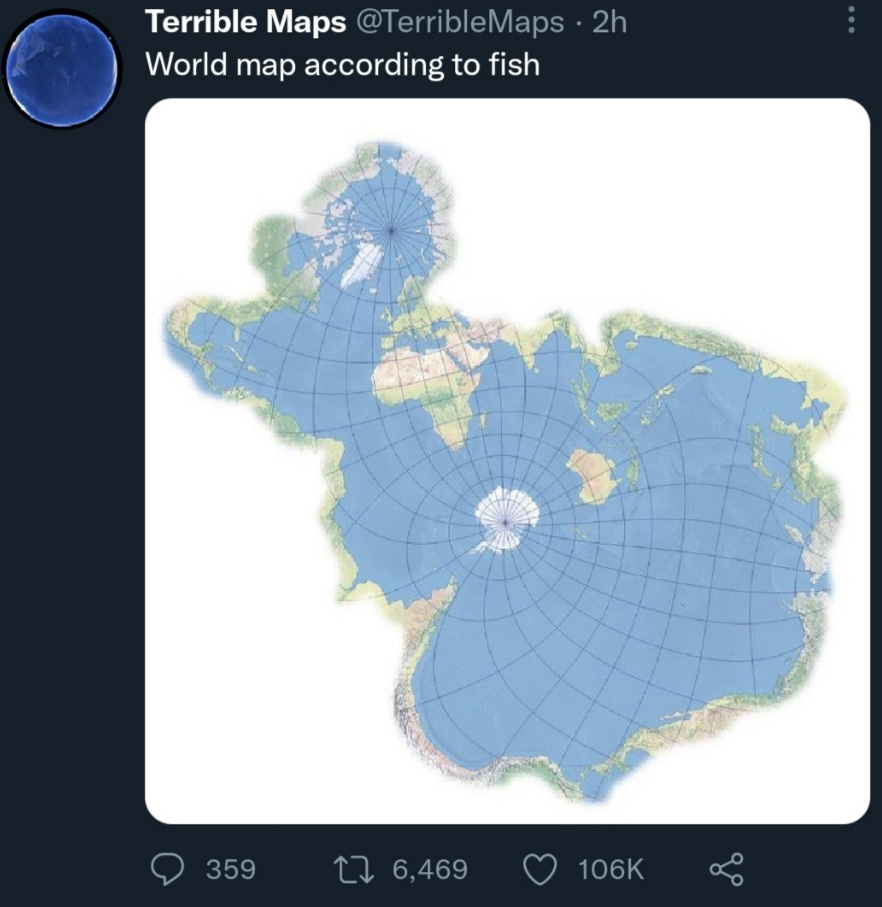

Giacomo Casanova’s Unfailing Luck: The Problem of Silent Evidence.
“The drowned do not vote; we should all be stockbrokers; do silent witnesses count?; …
The drowned worshippers, being dead, would have a lot of trouble advertising their experiences from the bottom of the sea. This can fool the casual observer into believing in miracles. We call this the problem of silent evidence.”
– Nassim Taleb (The Black Swan)
And therein the idea is born, the unassailable confidence to epiphany is spurred to a kind of deposition, the half-thoughts and the half-notions collect to a slowing in temperature, from gaseous instability into something palpable– it is this criticality of phase change. It is at such moments, as if every earthly occurrence– like the numbers of an algebra– spontaneously reveal themselves at once to be a part of a larger cosmic structure, a group (non-abelian: 𝑎∘𝑏 ≠ 𝑏∘𝑎, order of epiphany matters– or does it?), tying every constituent element together, married by some ring of fated structure. It is even that such moments of epiphany induce hitherto a kind of unification, a faisceau providing composition, field to both the positive and negative elements. We spoke of “mapping the silence”: it is perhaps in the stick where we find more wisdom than the carrot; it is those things we unlearn, which beget the learned, the negative anti-facts which give basis to the positive facts. Insofar as there is greater fundamentality to ignorance (we don’t know what we don’t know = ignorance²), we must therein, before knowledge, begin at un-knowledge– to first confirm what not to do, before we take any such advice on what to do. Moreover, they can be unified; though we claim that the most consequential “positive facts” are funded in substantia by “negative anti-facts” in disguise, they are all the more stronger together: those facts which unlearn other facts. Indeed of the most pregnant retrospective epiphanies, there is a fecundity to a kind of siblingship between Loves and Hatreds, not as antipodes, but as kin under the same surjected fiber from somewhere up above. It is in most things, this duality, which gives the greatest flavor of epiphany: of those moral structures which give representation, those which obey an intertwiner– on the left, to our familiarities, our affinities; on the right, to our ignorances, our aversions.
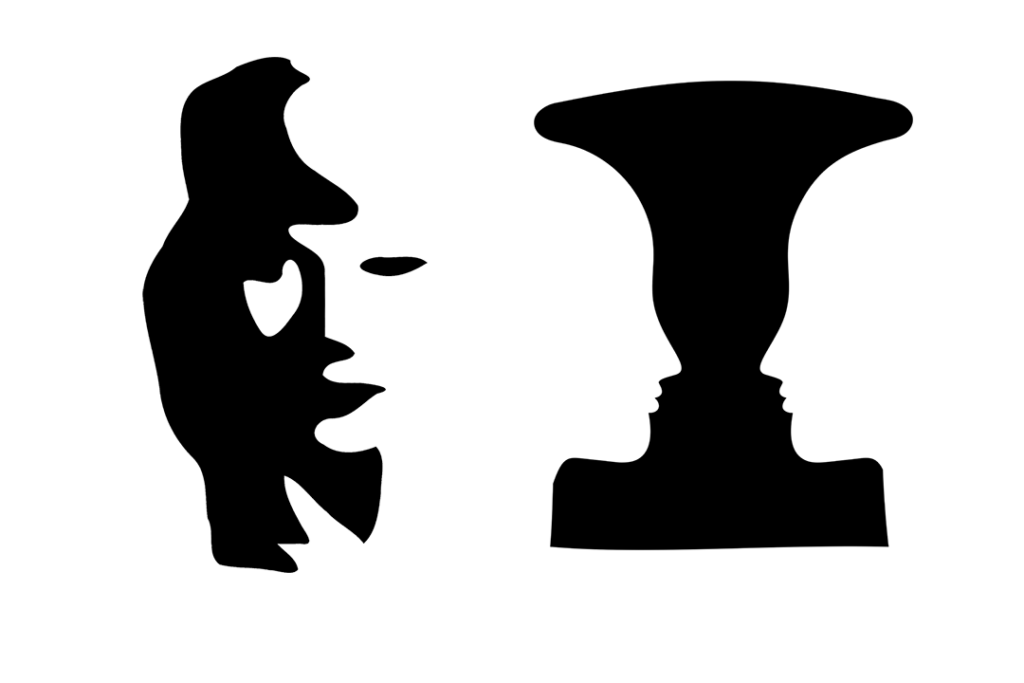
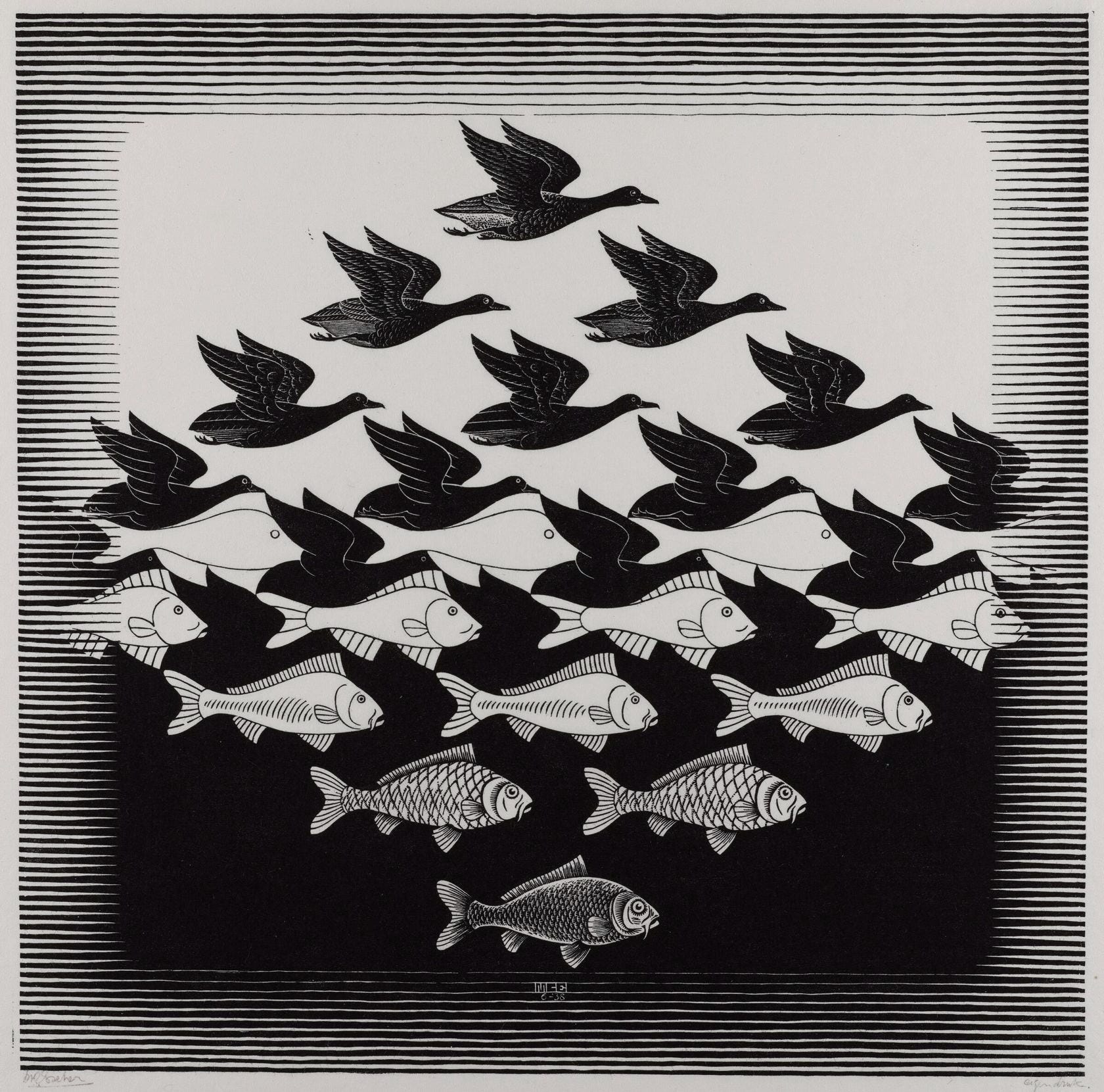

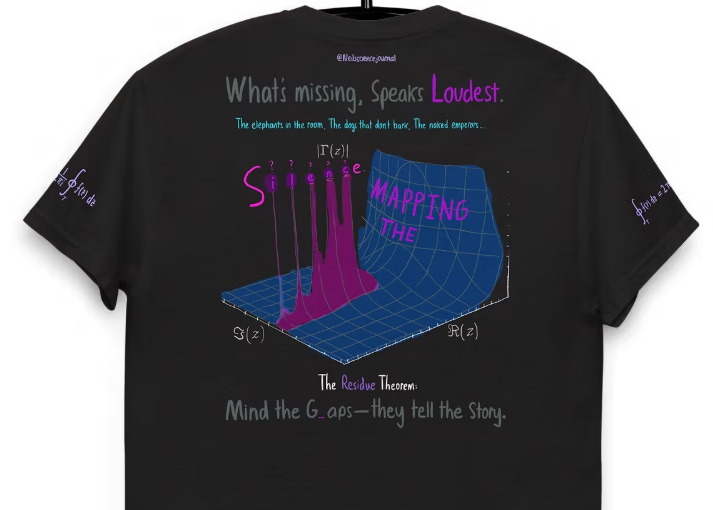
What is unspoken, speaks loudest– absence, itself, a presence. In the world of visual art, as every photographer, every painter should know: the “figure-ground” illusion of negative spaces. Or even so far as it were to lend to a political analogy, as Ernest Renan loosely refers to in one of my favorite quotes: “Nations are built on as much of what people agree to remember as what they agree to forget”. It is important always to remember this dual element of negative spaces; it is in our Hatreds that we shall find the potencies of our Love, it is in our greatest mistakes that righteousness becomes most obvious. There is perhaps an obfuscatory hubris in searching for the right thing to do; as Alan Watts might have it, “I’ll save you from drowning! Said the monkey, putting the fish safely up a tree”, and even moral objectivities notwithstanding, therein the fatal distortion of the unreliable narrator: “You ought to know what’s good for you. But if you knew what was good for you, then you would already be improved– and yet, you are not. Clearly you don’t know what’s good for you, much less of anyone else; the little voice in one’s head which petulates towards self-improvement, is itself, the conscience which needs self-improving: therefore, it cannot be trusted of such self-advisories”. Alas, looking in the space of positive elements for self-advised improvement is a rather unreliable, even illusory, conquest. No matter. Curiously, the dual space* proves useful where the former is not: it is almost never clear what the right thing to do is, it is almost always clear what the wrong thing to do is; there is very little to be learnt from what is, if it can even be trusted at all, and yet much to be learnt from what is not. There is an intuitive nativity to this negative space, “You Know It When You See It”, mistakes are rather objective and self-evident– therein, a richness to the anti-wisdoms.
*Footnote
Indeed, the philosophy of dualities in Mathematics presents a similar utility. It is hard to say what dualities actually are, in the words of Sir Atiyah: “Duality in Mathematics is not a theorem, but a ‘principle’ ”. Those things which are prudish in a vector space, become precisely all the more licentious in its dual (which also, miraculously, forms a vector space). Some objects are rather ambiguously geometric in the tangent space/tangent bundle, so we take to the cotangent instead. This “trick”, of hopping to the dual space, doing our work there, then hopping back, speaks to a great spirit of how Mathematics often works; hard problems are hard to solve, indeed, there is a nontrivial strategy in doing the hard work of transforming hard problems into easy problems, solving the easy problem, then transforming it back– the accounting checks out, profits are made. There is even a sense in which dualities of this nature provide a trade-off between the two worlds: simplicial vs singular homology comes to mind; where one world is easy to think, and the other is easy to actually do things in– and we abuse the bridge hopping ever freely between the two. John Tate had the famous aphorism: “think geometrically, prove algebraically”.
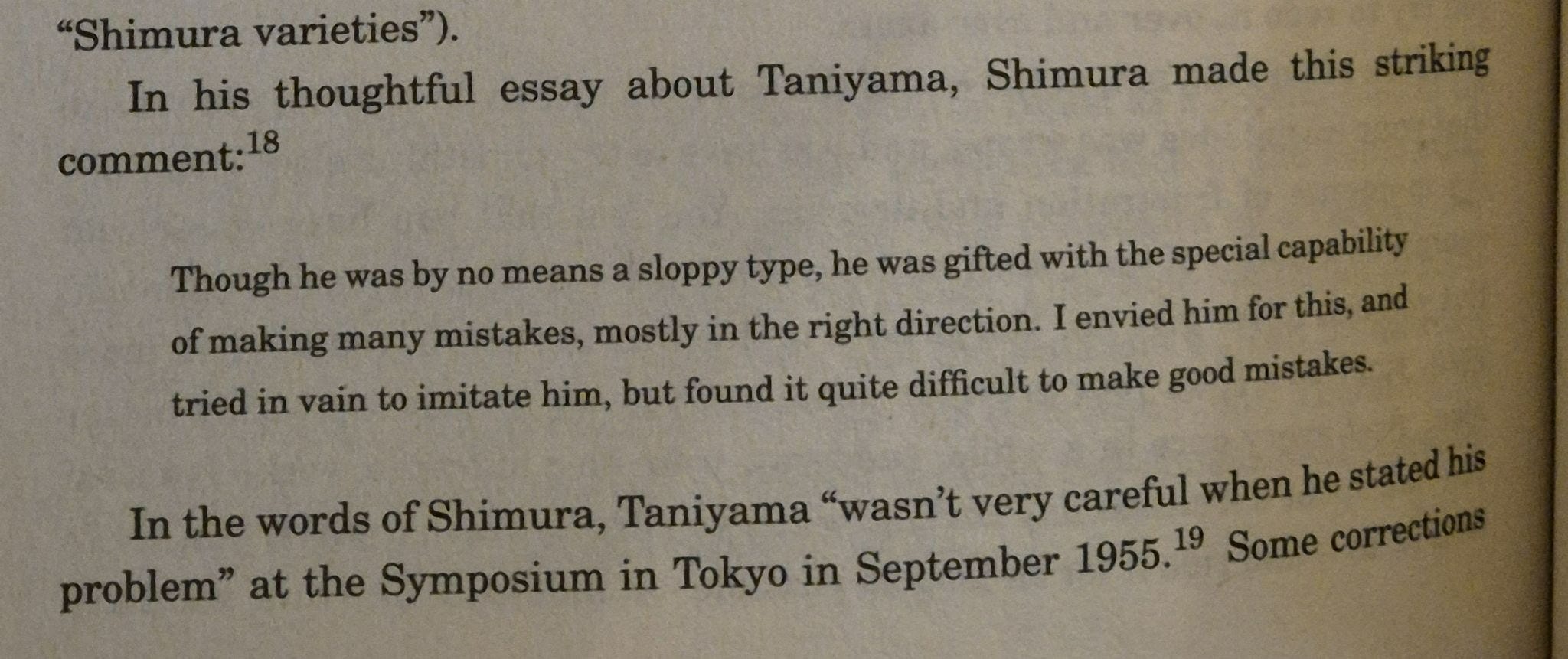
It must be, therefore, of all such epiphanies to induce a kind of Jungian duality. Precisely those lessons which come to mean the most, involve both carrot and stick; perhaps they even transmute, insofar as the carrot can certainly also serve as a blunt-force instrument, and to a dog, sticks are toys not weapons. Alas, we cannot escape the romantic truism– the enemies-to-lovers cliché follows us here, after all, it is cliché for good reason. I do not contest the legitimacy of premier amour, the first Love is real, and no less important– but it remains incomplete; like a figure who has outran his own shadow, it must unite with the grievances, there is a Hegelian romance to it. The necessary onion-skins of hatred will take us all the way home, it is in such places where we wish least to introspect– the dirt byproducts of excavation, looking for a buried diamond ring, not realizing that it has already been dug out, harbored safely in the pile of dirt next to our attention (as they say, every plot of hatred is but fibrous veneer masking guarded and uncharted passions). The synthesis is there: searching for the ring, for Love, only to find it in the spoil pile; “all along it was hatred you were looking for”, you think to yourself, and therein it becomes obvious: there was never any difference, the hole you dug and the pile you produced are one and the same. These remain platitudes, obvious ones even; nothing you haven’t seen before on gift-shop T-shirt quotes or soap opera rom-coms. We all know of the “Hero’s Journey”, but that’s not how this story goes; we shall call this trope the “Lover’s Journey”, the plot is simple: why I had learned to Love what I Loved, why I had learned to Hate what I Hate. In the end, not only do they happen to be the same, it is in all things that they must be; two points, affinities and aversions, seemingly antipodal, and yet surjected to one and the same en équivalence.
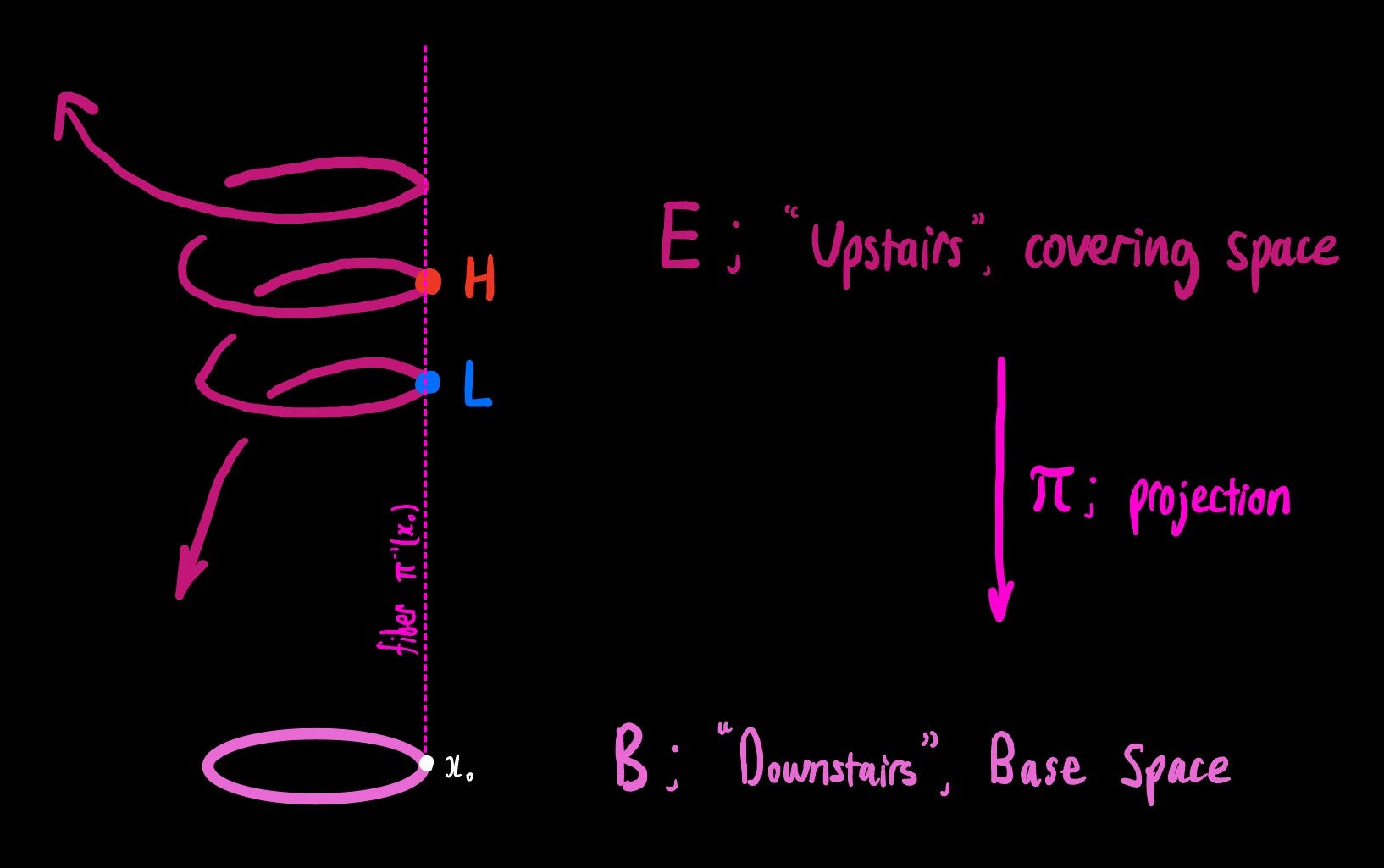
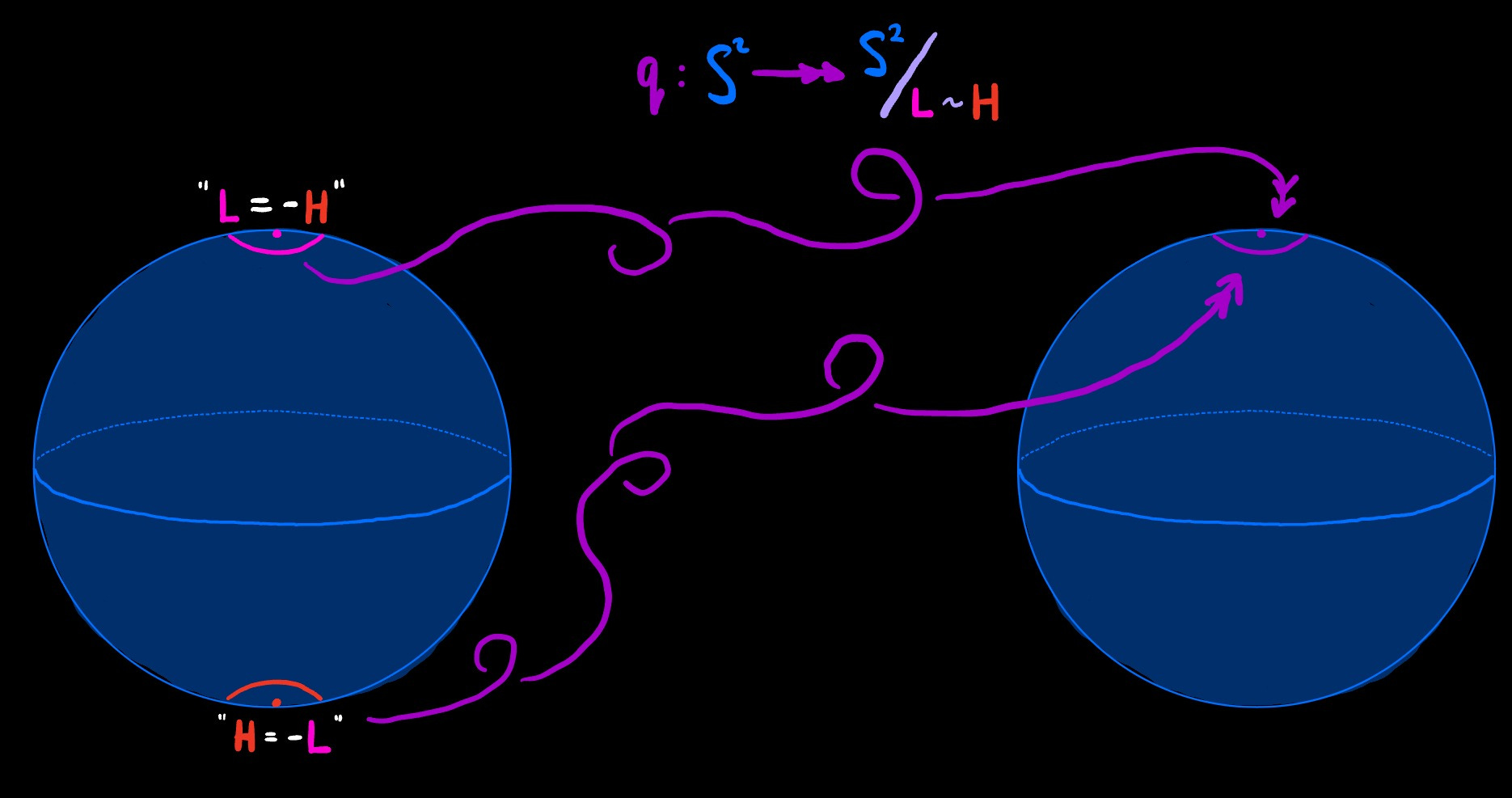
Standing here on the shores inundated by these lengthy fortitudinous briefings, I implore you of the foreword should you feel exhausted and hesitant to continue. We are complex creatures, filled to the brim by a psyche of inconceivable depth– tasking exploration both terrifying and arduous; the soul of persons would not be tainted of such Beauty if it were otherwise facile and anesthetized for conceivability. Pulchrum est paucorum hominum (“Beauty is for the few”), the taxing difficulty of being understood is perhaps more feature than bug as it brings true meaning to those who choose to bear the burden of acquainting us.
Perhaps this may be a rather heretical claim, and if so, be that as it may: I somehow think that our duty here is inverted. I actually have come to think there is a particular nasty hubris made of a writer who demands, every onlooker a potential reader, every potential reader held captive to their words, subjugated unto mute-therapy and forced to uptake those intimate cognitive burdens of some oh-so-specific stranger. It is true after all that our budget for social comprehension (re: Dunbar’s Number) is of only so finite a size, there is a bona fide neurological upper bound to empathy– and therein, why should you necessarily elect to expend it on one person rather than any other; especially insofar as this corpus of text stands hardly unique nor predilect amongst the grand library of literature which make up the world’s giant campfire, the storytelling market is saturated far and aplenty. This gives to a kind of choice anxiety; and if you shall expect for me some grovel or persuasive reason for which this story is more worth the eyes and the ears than any other, I will disappoint you. In fact I claim that any good book we pick up, any which begets to an honest reading, must necessarily have no such reason. To successfully seduce, to convince somebody– intellectually, soundly, and all the more logically– to Love you, can therein not be Love at all. It would be merely possession, and perhaps appropriately so in both senses of the word. If you were ever poised to wish upon a star; if you were ever in brew of eros, the alchemist’s aphrodisiac; we have long told tales of potions and the duplicitous Genii trapped in vial or vase: there would be no agency, no choice– if the Love were merely derived as consquence and not as axiom, what good then is it? To Love is to Choose; to be Loved, Chosen. Needless to spoiler: we can fool ourselves no sooner nor no further, to manufacture this élan vital taxes to an inevitable guilt, of hostage: to successfully seduce is to believe that you have duped your Lover as though a bird lured into its own cage (and how ever could the sane comply! To dupe a fool is only self-abnegation; indeed the con-man hates his own clientele, for he believes he is surrounded by idiots, his success therein only measured against with greater contempt for mankind); as did Narcissus’ reflection tempt himself into drowning, to succeed there is to become one’s very own sycophanta.
Indeed, more than inversive, I find it rather insulting– this modern complaint that writing must cater; that if the reader struggles, it is the writer who has somehow failed a test of hospitality. You chose to read, you choose to read; the book may be heavy and yet it is your choice all the same not to put it down. You volunteer for the burden of intimacy– it is anything but a charity to receive: for the literary entitlement, no, we do not expect to be rewarded by a writer, we should expect if anything to be taxed, as of any other form of exercise. The writer shall ever be poised to respond: “just as a Lover, I should not seduce you into sacrifice. If your devotion must be persuaded of, it is superficial, unworthy, and I do not want it. There is a paradox there: if I must lure you into reading, who then is the reader? I would be reading myself, and there is no need for that. If you shall need and rely on my words to convict you that this is at all worth reading– then how can I call you a reader? What permits you to read the first word and not the second? The second but not the third? At what point must you decide that you have read enough to fathom interest in reading further? Am I remiss to call out an irony there, that seduction succeeds only insofar as it brings upon its own failure to honest Love. It is a seduction to fault of coercion; more than any capitalistic expropriation, it would be wrong to sell you a burdensome task, why must I insist that I am worthy of your attention? I shall not scream on rooftops ‘Look at me! Read me! Behold and admire that I will fascinate you!’. How ridiculous. Ink is cheap … It is ironic that a writer must exact a fee to their words; if anything, I should be paying you, since the reader is already taxed of another, more costly form of value: they must pay attention”.
That is not to say that the writer is innocent here on all counts! Surely there are fouls to hyper-esotericism, to the stench of laconicsm, a solipsistic illness to writing into the wind; a privatized author to that which has no means of being read. In all things, generally, it is this ethical tightrope of seduction; the task of a writer in attracting a reader shares great adjacency– perhaps even to extent of isomorphism– to the paradox of Love. We seduce in sought of Love, and thereafter should we succeed, it cannot be Love; by its own definition, to manufacture and then to receive your own machination– to ask for Love, and then to get it, cannot be Love at all. How then does it all work? We are bystanders on a street, mute by even telepathy, looking for Love and yet unwarranted to look for anything at all; how do we find each other? I don’t know. And yet somehow we always do. “I did not scream on rooftops wearing signs looking for somebody, and yet here you are. Why, I cannot ask– and perhaps it is categorically inappropriate entirely, to ask why someone Loves you; any such answer to that question would render it then a tautological failure, to have a Why in Love, ceases its unconditionality”. We know Love does not come from shouting on rooftops, it is not born in pleading desperation; wiser heads know better than to advertise. It’s like looking for cats. Love does not come when asked of, it knocks on your door spontaneously and serendipitously when you are most content and unasking– from whence does it come? Who knows. And yet most often it arrives, asked, unasked. The decision is hardly yours to make. It is here all the same– indeed, all lexical manifestations of any self-respecting writer are in this way Love letters to the world and its inhabitants. The relationship between a writer and their readers, is precisely this– and it must be: it is choice, unsolicited, and with never the transactional expectation of being pleased.
If thus far you accept this onus, then who am I any more or less of a moral authority to stop you nor goad you onwards.